ANSI/SPI B151.1 Guarding: 5 Injection Molding Interlock Priorities for 2026
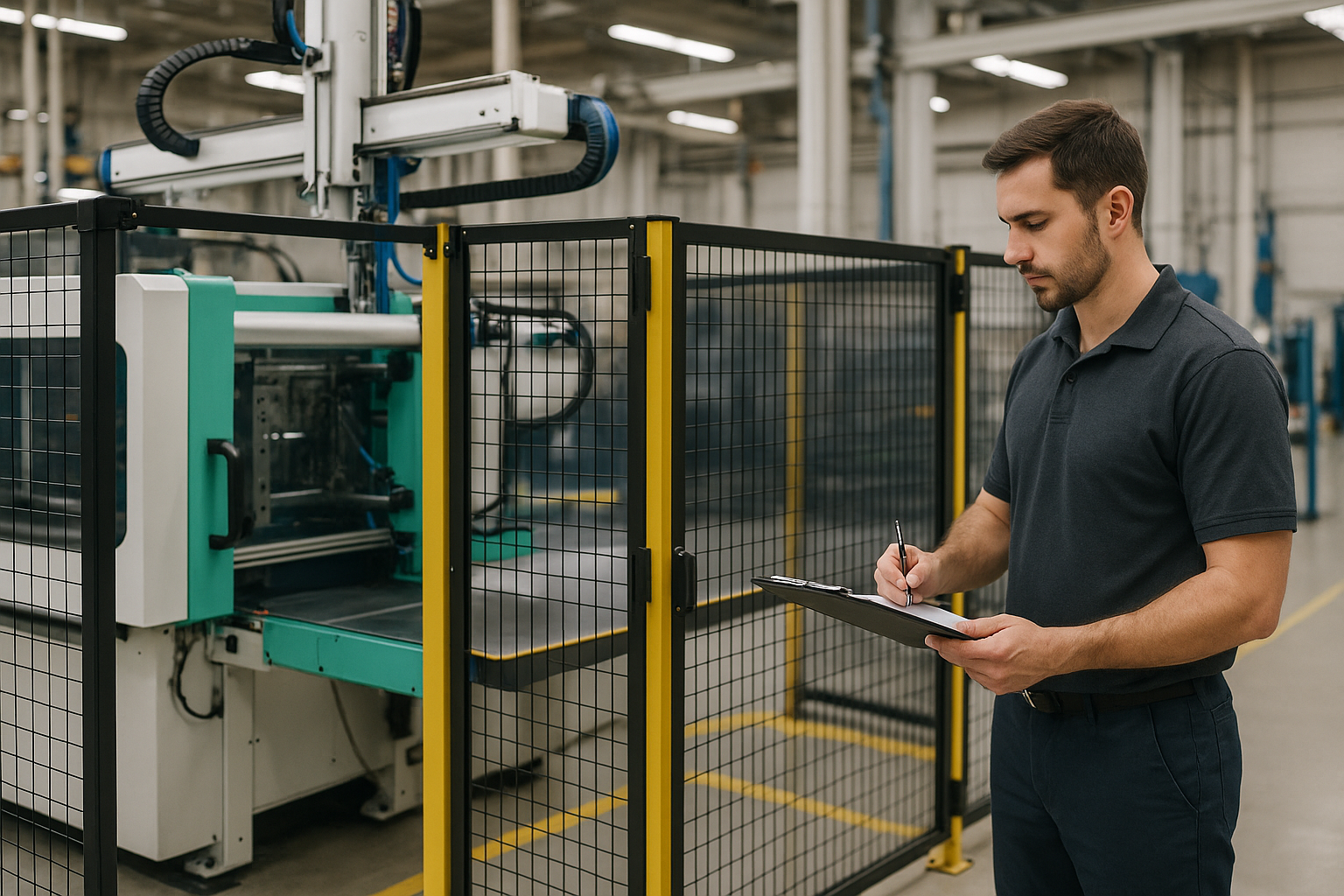
Learn 5 interlock priorities for injection molding machine guarding under ANSI/SPI B151.1, including robot zones, purge tasks, and LOTO.
Published: August 9, 2026 · By Steven Brooks
Category: Industrial Safety
Frequently Asked Questions
Does ANSI/SPI B151.1 replace OSHA requirements for injection molding machines?
No. OSHA requirements such as 29 CFR 1910.212 and 29 CFR 1910.147 still apply, and ANSI/SPI B151.1 provides the plastics-specific guidance for how safeguarding and interlocks are typically implemented on injection molding machines.
Do mold changes require lockout/tagout?
Yes, mold changes are generally servicing and maintenance tasks that expose employees to hazardous energy, so they should be covered by 29 CFR 1910.147 with machine-specific isolation steps.
Is an interlocked gate enough for a robot drop zone?
Not unless the gate is coordinated with all hazardous motion in that shared space. If the press stops but the robot can still move, the safeguarded space is not fully protected.
Are purge operations covered by guarding or lockout/tagout?
They can involve both. Guarding is needed to protect against hot surfaces and material discharge, and lockout/tagout may be required when purge or troubleshooting tasks expose employees to unexpected motion, pressure, or other stored energy.
What should be in a machine-specific molding LOTO procedure?
It should identify the actual energy-control points for that press and its integrated equipment, cover electrical, hydraulic, pneumatic, thermal, and other stored-energy hazards, and match the real tasks employees perform such as mold changes and fault recovery.