Boom Lift Tie-Off and Elevated Exit in 2026: What ANSI A92.22-2024 and OSHA Expect
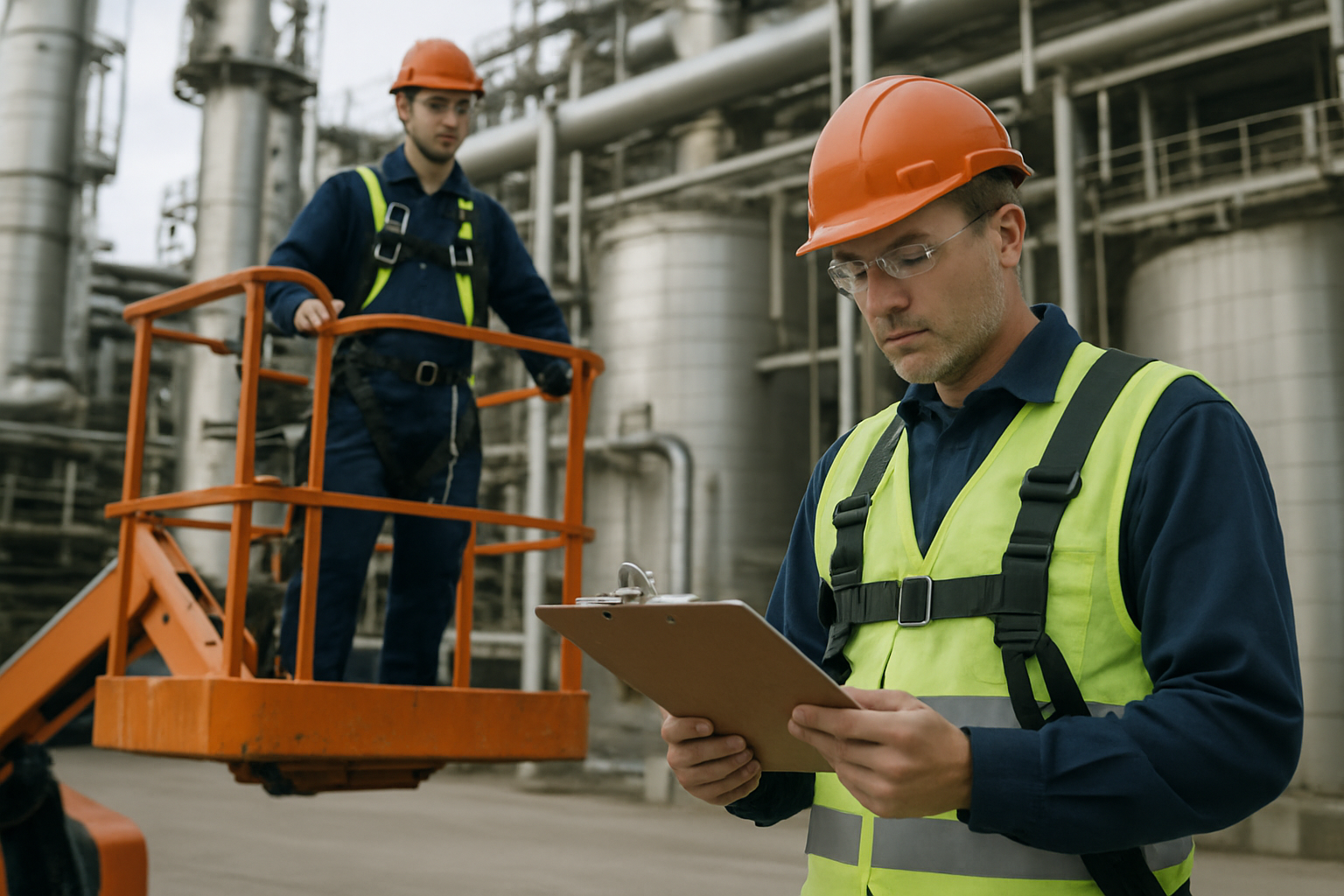
Boom lift tie-off and elevated exit rules for 2026: know ANSI A92.22-2024 and OSHA expectations for anchors, training, and rescue planning.
Published: August 4, 2026 · By Steven Brooks
Updated: August 9, 2026
Category: Industrial Safety
Frequently Asked Questions
Do workers need to tie off in a boom lift?
Generally, yes. For boom-supported MEWPs, workers should follow the manufacturer’s instructions and use personal fall protection connected to the designated platform anchor.
Do workers need a harness in a scissor lift?
Usually, the scissor lift’s guardrail system is the primary fall protection. Employers still need to check the manufacturer’s instructions and site-specific rules before deciding.
Is elevated exit from a MEWP allowed?
It can be allowed in limited circumstances, but it should be rare, planned, authorized, and supported by a site-specific procedure. The procedure should address the transition, anchor selection, and rescue.
What should an elevated-exit procedure include?
At minimum, it should define approval criteria, hazard review steps, anchor selection, the transfer sequence, communication methods, rescue actions, and stop-work triggers.
Why is competent-person training important for MEWP elevated exit?
Because the biggest risks often come from judgment calls in the field. Competent-person training helps supervisors evaluate fall hazards, equipment condition, harness fit, and rescue readiness before approving the work.