California’s Artificial Stone Ban: What Fabricators Need to Do Now
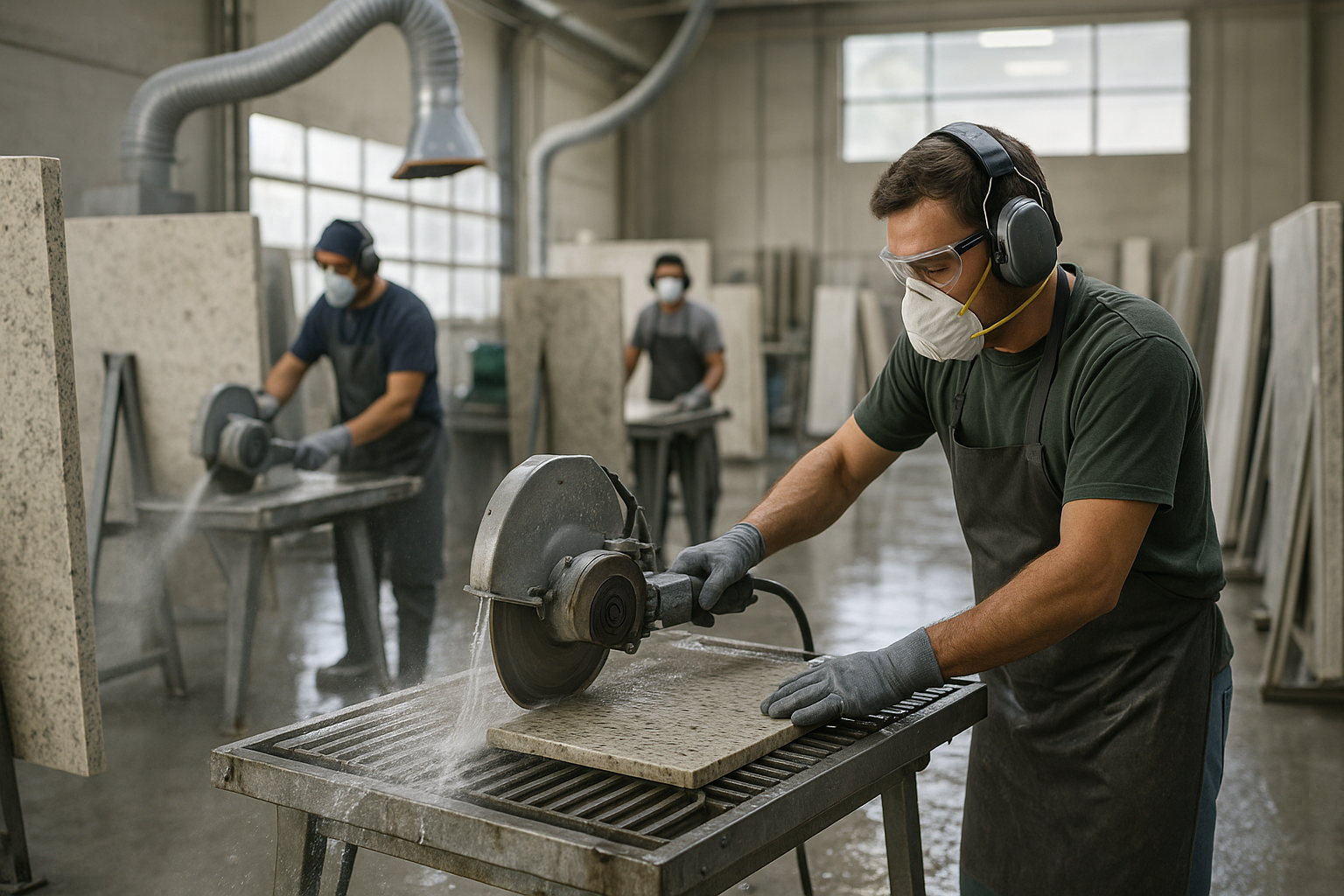
California’s artificial stone ban means fabricators should review silica controls, exposure assessments, training, and Title 8, Section 5204 compliance.
Published: June 25, 2026 · By SafetyNet Editorial Team
Updated: June 27, 2026
Category: Industrial Safety
Frequently Asked Questions
Does California’s artificial stone ban mean silica is no longer a risk in my shop?
No. The post says silica risk still remains with natural stone, concrete, mortar, tile, masonry products, and other silica-generating materials, so employers still need a functioning silica program.
What should fabricators review first because of the artificial stone ban?
Start with a gap assessment across fabrication, installation, maintenance, and contractor management. The post says to inventory materials, confirm whether any artificial stone remains in use, and review how current tasks, tools, and controls line up with your written procedures.
What parts of a silica program should EHS managers recheck under Title 8, Section 5204?
The post says to review exposure assessment, engineering controls, housekeeping, respiratory protection, medical surveillance, training, and recordkeeping. It also stresses making sure supervisors can clearly explain current controls for each fabrication and installation task.
What work activities are common silica exposure points for stone fabrication and installation?
Common exposure points listed in the post include slab cutting, edge profiling, polishing, handheld grinding and drilling during installation, dust-disturbing cleanup, maintenance on dust collection systems and water-fed tools, and rework, demolition, or renovation involving stone surfaces.
Can the NIOSH silica criteria document help if Cal/OSHA rules control compliance?
Yes. The post says the NIOSH criteria document is a useful benchmark for pressure-testing your program, especially when evaluating exposure pathways, air monitoring strategy, control options, medical surveillance coordination, and mixed-material environments.