Coexisting with Automation: Robot and Cobot Safety in Manufacturing
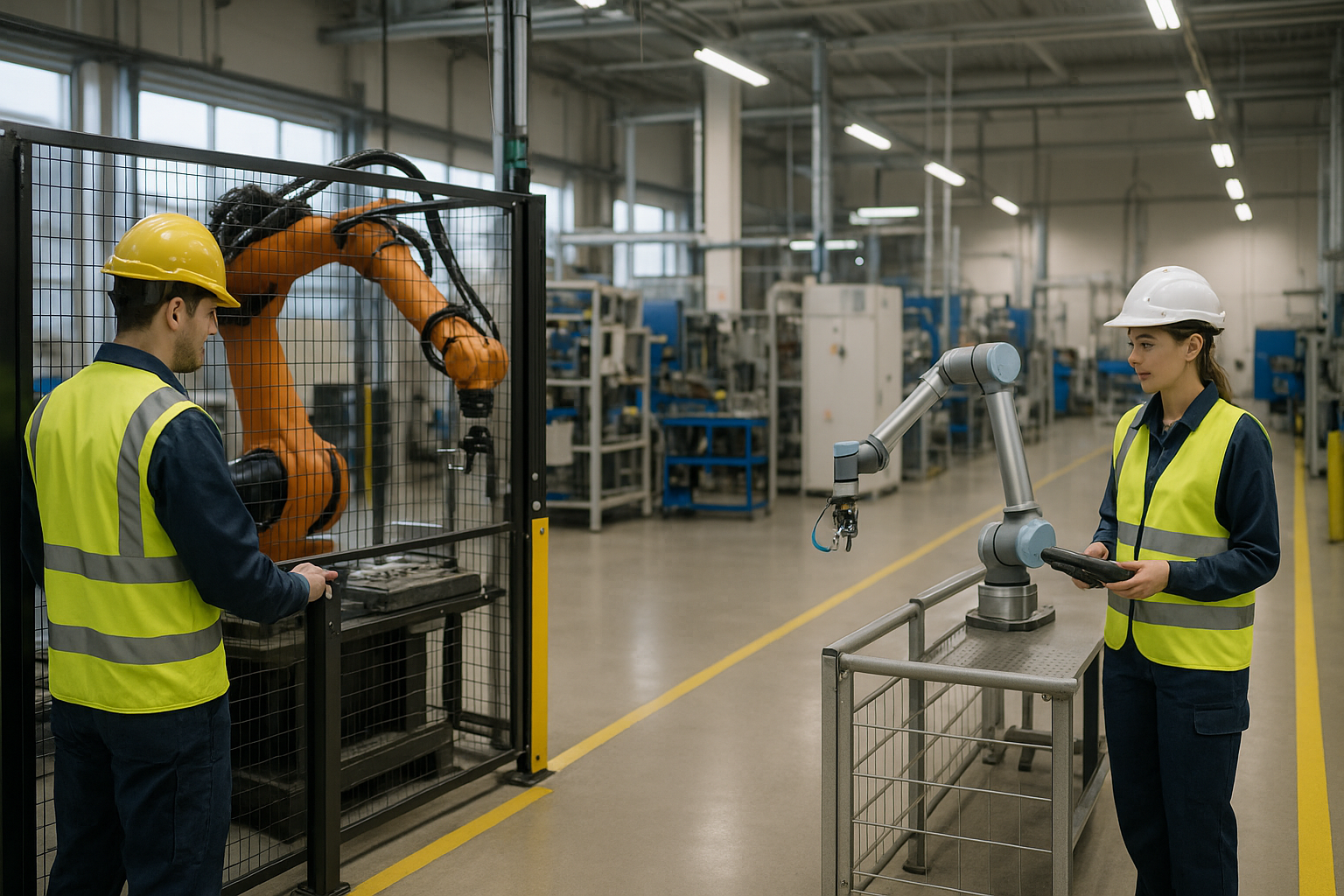
Improve robot and cobot safety by reviewing real worker interaction, guarding, lockout/tagout, and change management in automated areas.
Published: June 24, 2026 · By SafetyNet Editorial Team
Updated: June 27, 2026
Category: Industrial Safety
Frequently Asked Questions
Are cobots automatically safe because they work near people?
No. The post says cobots are not automatically safe, and employers still need to assess hazards from robot motion, tooling, workpieces, surrounding traffic, and the worker’s task.
What does OSHA expect for robot and cobot safety if there is no single robot-specific standard?
The post explains that employers often meet obligations through the General Duty Clause by identifying foreseeable hazards, applying feasible safeguards, and making sure controls work during normal operations, changeovers, troubleshooting, cleaning, and maintenance. It also points to recognized guidance such as RIA/ANSI R15.06 and NIOSH resources.
What tasks should be included in a robot safety review?
A review should cover the full system as installed, not just the robot arm or the cobot label. The post says to look at routine and non-routine tasks such as setup, jam clearing, fault recovery, teaching, programming, testing, cleaning, servicing, and maintenance.
When should we reassess risk on a robot or cobot system?
The post says to perform a formal risk assessment before installation and after major changes. It also says to reassess risk after changes to tooling, software, parts, fixtures, line speed, layout, staffing, or throughput expectations.
What are common robot safety hazards in manufacturing and warehousing?
The post lists hazards such as unexpected startup, contact with moving arms or tools, pinch points, struck-by hazards from dropped parts or shifting loads, reach-in behavior during jams, defeated guards or bypassed interlocks, nearby forklift or pedestrian interaction, and stored energy hazards that may require lockout/tagout.