Cold Storage Safety in 2026: Ammonia Systems, Ergonomics, and Leak Response
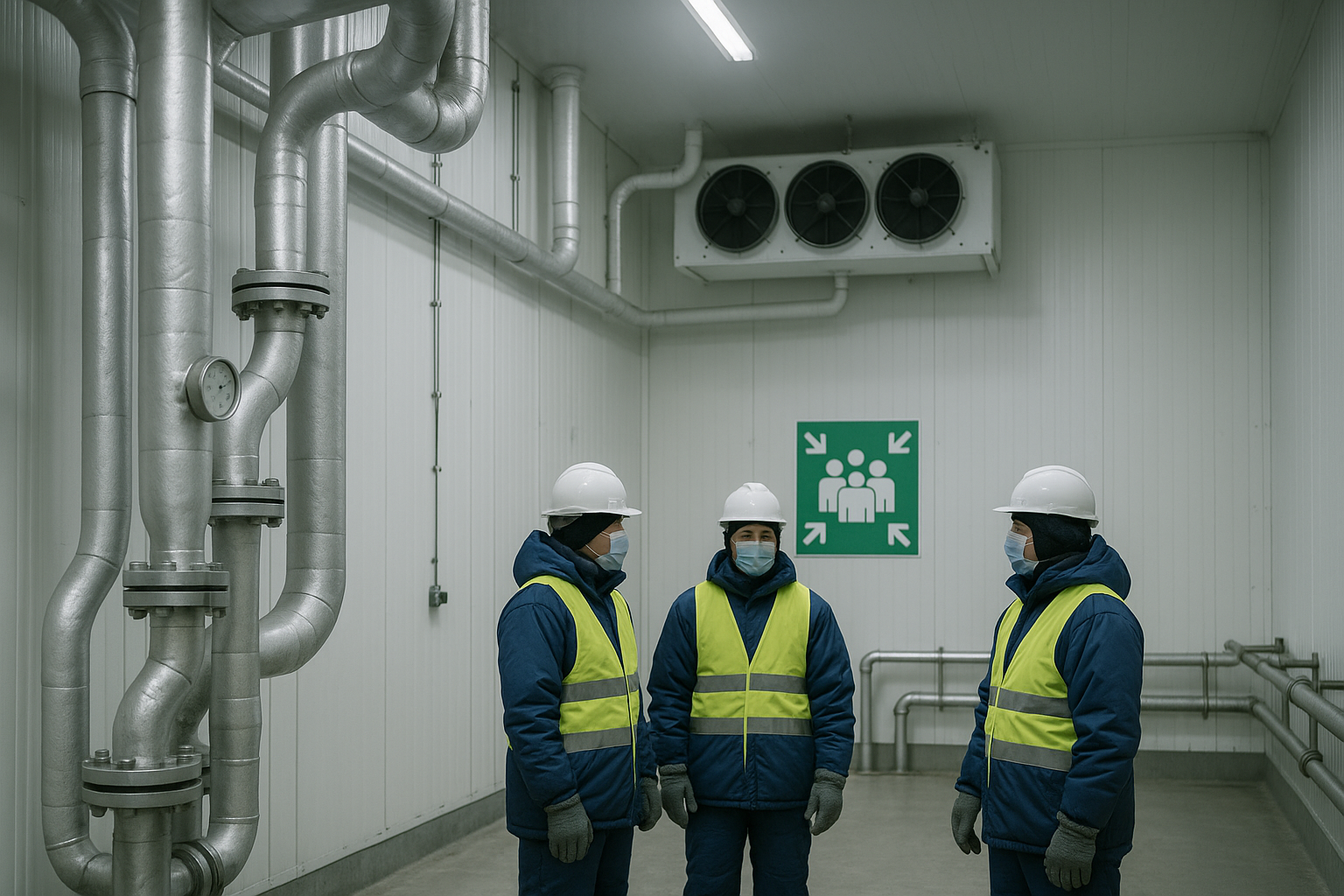
Improve cold storage safety in 2026 by tightening ammonia system control, testing leak response, and reducing sub-zero ergonomic strain.
Published: June 27, 2026 · By SafetyNet Editorial Team
Category: Industrial Safety
Frequently Asked Questions
What are the main cold storage safety priorities in 2026?
The post highlights three priorities: know and maintain the full ammonia system, reduce sub-zero ergonomic strain, and make leak response simple enough to work under pressure. It also stresses using management of change so equipment, layout, or control updates do not create hidden hazards.
What should we check first in an ammonia refrigeration system?
Start with the full system, not just the machine room. The post says to keep documentation, drawings, labeling, maintenance, alarms, detector placement, and contractor controls current, while managing corrosion, vibration, impact exposure, and insulation damage.
How do we make an ammonia leak evacuation plan actually work?
Employees need to know how to recognize a release, where to go, who handles accountability, and when areas are safe to re-enter. The post recommends clear evacuation maps, alarms that can be understood over noise and hearing protection, realistic drills, and route checks under normal and peak operating conditions.
What are the biggest ergonomic risks in freezer and dock work?
The post points to repetitive pallet handling, manual lifting in layered PPE, reduced grip strength, extended standing or walking on hard cold surfaces, and slips that lead to sudden overexertion. It recommends practical controls like task rotation, better glove selection, lift assists, improved floor traction, and warm-up opportunities.
When should management of change be used in a cold storage facility?
The post says management of change is important even for changes that seem minor, such as valve replacements, control updates, temporary bypasses, sensor moves, or room layout changes. A change review should check impacts on system pressure, flow, isolation, relief capacity, procedures, labeling, training, leak detection, ventilation, and emergency routes.