Commercial Printing Safety and Environmental Requirements in 2026
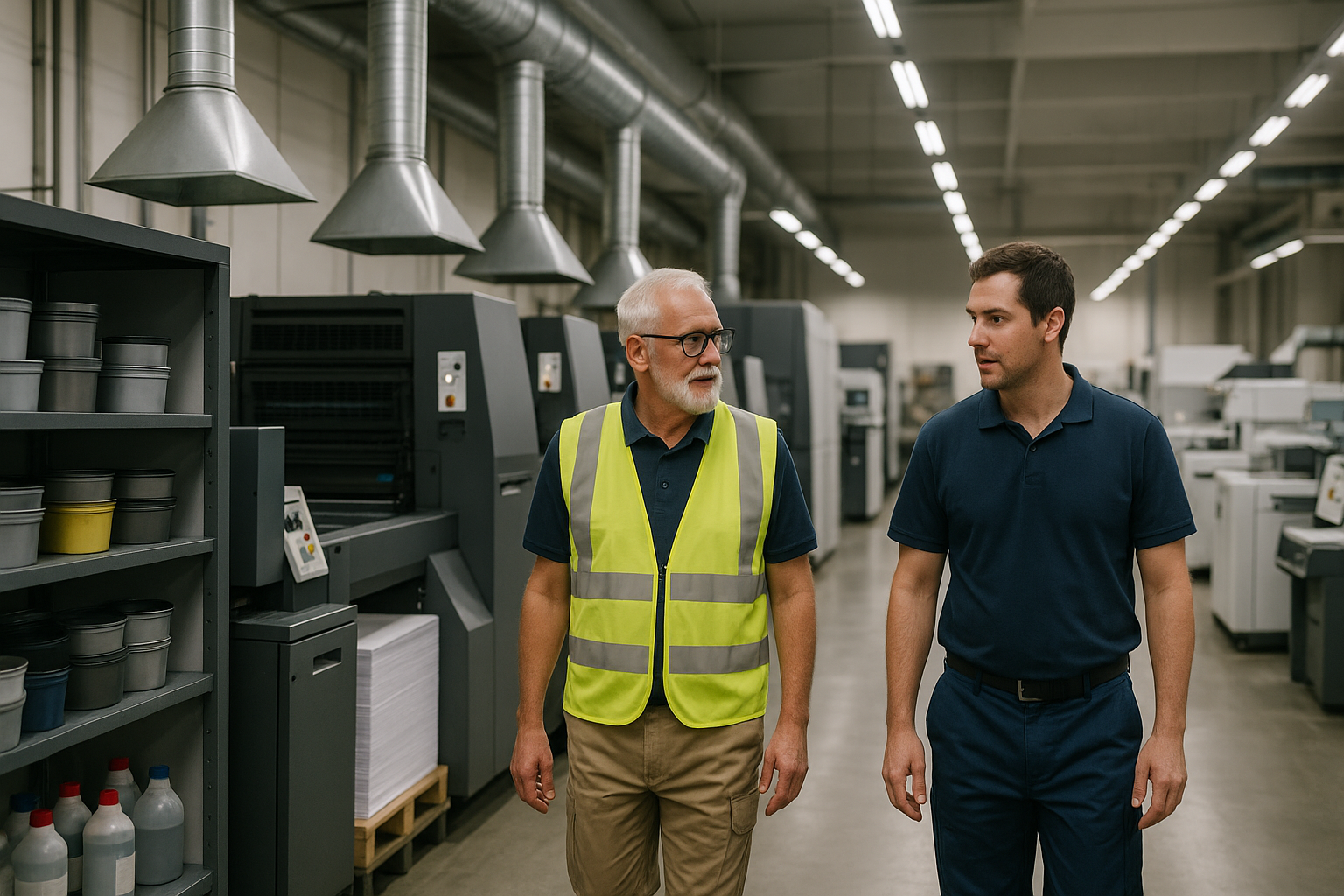
Commercial printing safety in 2026 requires coordinated controls for ventilation, flammables, machine guarding, lockout/tagout, and air permits.
Published: July 1, 2026 · By SafetyNet Editorial Team
Category: Industrial Safety
Frequently Asked Questions
Does OSHA have a single standard just for commercial printing?
No. Commercial printing operations usually fall under several general industry standards, including ventilation, flammable liquids, machine guarding, lockout/tagout, electrical safety, and hazard communication.
Why do AQMD rules matter in a print shop?
AQMD rules can affect the inks, coatings, adhesives, and cleaning solvents a facility uses, along with recordkeeping and permit obligations. They are especially important where VOC emissions or cleaning processes are regulated locally.
What equipment should be reviewed first for lockout/tagout and guarding?
Start with presses, cutters, folders, and bindery equipment where employees clear jams, change parts, or perform maintenance. Focus on tasks involving moving parts or stored electrical, pneumatic, hydraulic, or mechanical energy.
How do ANSI standards help if OSHA already applies?
ANSI standards help translate broad OSHA duties into more detailed machine-safety and hazardous-energy practices. They are useful for risk reviews, guarding improvements, and equipment-specific energy-control methods.
What is the best first step for a 2026 compliance review?
Conduct a gap assessment across the pressroom, bindery, chemical storage, waste areas, and maintenance spaces. Review chemicals, ventilation, flammable-liquid handling, machine safety, training, and permit-related records together.