Confined Spaces in Digesters and Tanks: Lessons for Renewable Gas Facilities
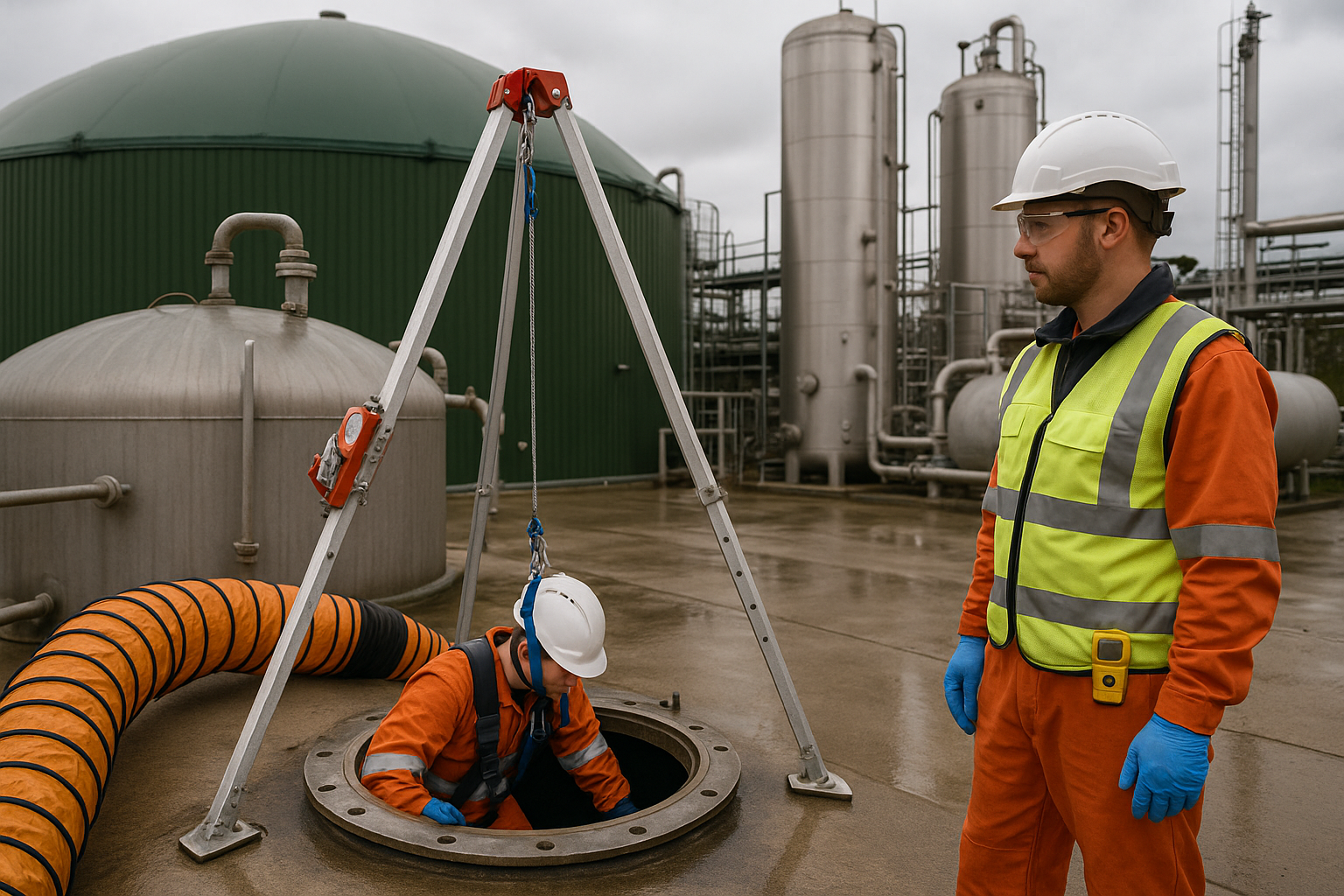
Confined spaces in digesters and tanks demand more than permits: verify testing, isolation, rescue readiness, and contractor controls before entry.
Published: June 28, 2026 · By SafetyNet Editorial Team
Category: Industrial Safety
Frequently Asked Questions
What makes digesters and tanks especially dangerous as confined spaces?
They can contain oxygen-deficient atmospheres, toxic gases, flammable gases, and engulfment hazards at the same time. Conditions can also change quickly when residues are disturbed, lines are opened, or equipment is not fully isolated.
Is pre-entry gas testing enough for a digester or process vessel?
Not always. The article recommends testing before entry and continuously or periodically during the job based on the hazard assessment, especially where conditions can change during work.
Can we rely on ventilation alone to make a tank safe to enter?
No. Ventilation is a control measure, not proof the hazard is gone, and its effectiveness needs to be confirmed with proper atmospheric testing.
What is the most important rescue takeaway for confined-space entries?
Rescue must be realistic and site-specific before entry begins. If the plan depends on improvised actions or an unverified rescue capability, the entry is not ready.
How should host employers manage contractor confined-space entries?
Use a clear interface process that covers hazards, isolation, testing, communication, and emergency roles. The article recommends one entry and one clearly defined chain of authority so responsibilities do not fall through.