Electrical Safety: Control the Hazards Before Work Starts
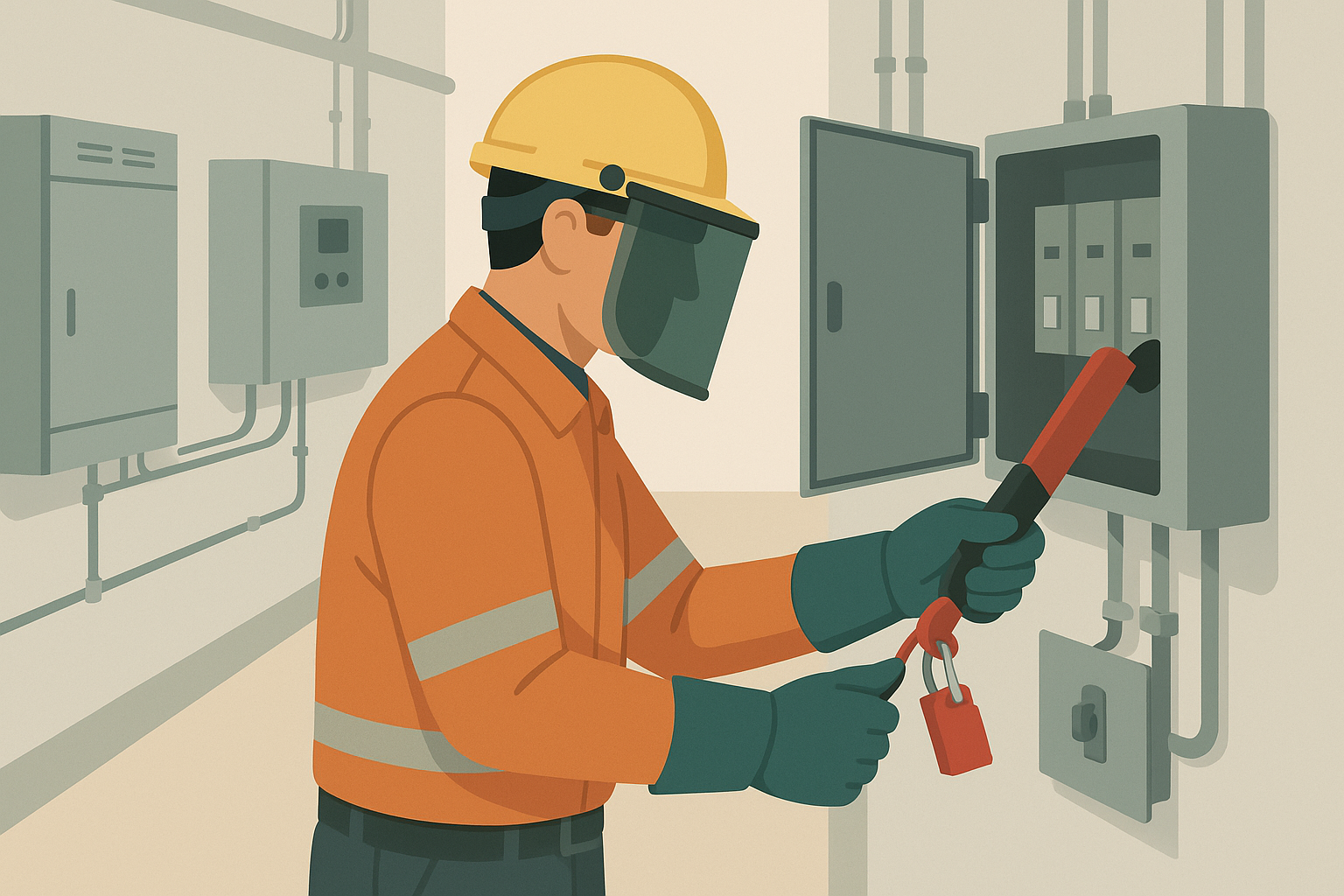
Electrical safety starts with planning: de-energize when possible, verify isolation, and align 29 CFR 1910.147 with 29 CFR 1910.333.
Published: June 2, 2026 · By SafetyNet Editorial Team
Updated: June 27, 2026
Category: OSHA Quick Talks
Frequently Asked Questions
When should electrical work be de-energized?
The post says de-energizing and verifying zero energy should be the default before repair, cleaning, or adjustment work when possible. Energized work should be treated as the exception, not routine practice.
What should be checked before electrical work starts?
Before work starts, check panels, disconnects, cords, tools, and temporary power to make sure they are in good condition and used as intended. The post notes that small defects and improvised fixes are often linked to serious events.
Who should be allowed to do work with electrical exposure?
Only qualified workers should handle tasks that expose them to electrical hazards. Everyone else should understand boundaries, permits, and approach limits.
What OSHA rules are tied to electrical isolation and safe work practices?
The post points to lockout/tagout under 29 CFR 1910.147 and electrical work practices under 29 CFR 1910.333. It says those requirements should work together in the field.
Why should EHS managers pay extra attention to contractor and maintenance electrical work?
The post says electrical safety gaps often show up during outages, shutdowns, and fast-moving maintenance work. It advises EHS managers to review energized-work decisions, verify isolation steps, and watch the job in real conditions, not just on paper.