Ergonomics: Adjust the Job Before the Job Breaks the Worker
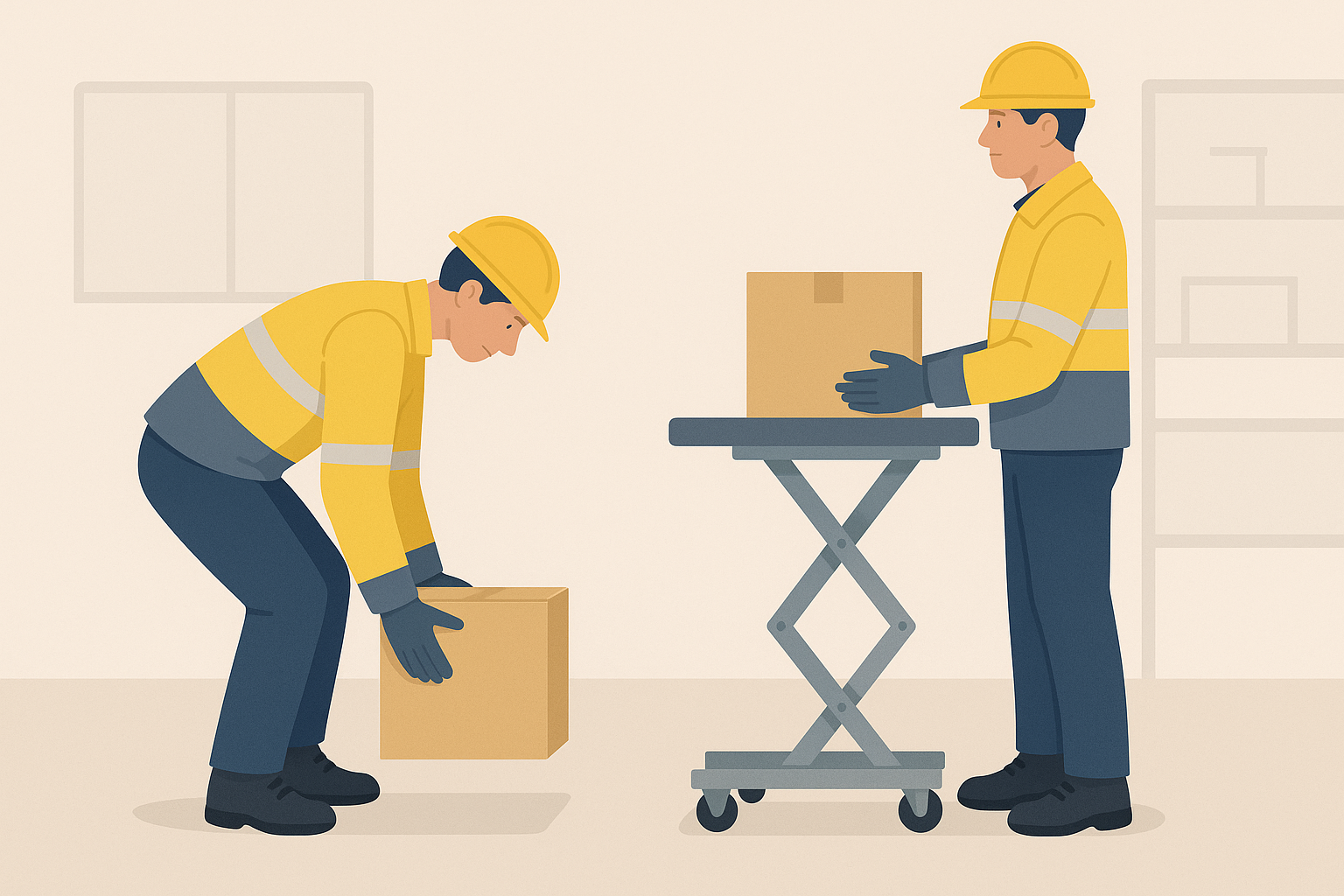
Ergonomics means fitting the job to the worker. Spot awkward lifts, reaches, and postures early, then make small fixes that reduce strain.
Published: May 25, 2026 · By SafetyNet Editorial Team
Updated: June 27, 2026
Category: OSHA Quick Talks
Frequently Asked Questions
What does ergonomics mean in the workplace?
Ergonomics means fitting the job to the worker instead of forcing the worker to adapt to a poor setup. The goal is to keep repeated awkward work from turning into strains, sprains, and other musculoskeletal problems.
What kinds of tasks should I look at first for ergonomic risks?
Start with tasks that involve lifting from the floor, above shoulder height, or far from the body. Also look at repetitive hand work, forceful gripping, nonstop reaching, and workstations or tools that force awkward wrist, neck, or back positions.
What are some simple ways to reduce ergonomic strain?
Small changes can make a big difference, such as raising, lowering, or repositioning the work to keep it in the power zone. You can also use carts, lift assists, adjustable tables, better material flow, and task rotation when repetition is hard to eliminate.
Why should supervisors respond early when workers report discomfort?
Early action can help keep minor discomfort from becoming a bigger problem. The post recommends training supervisors to respond when workers first report issues.
Does ergonomics only apply to office work?
No. The post says ergonomics applies on the warehouse floor, at a machine, behind the wheel, and at a desk.