Forklift and Boom Lift LOTO in 2026: What OSHA Requires Before Service
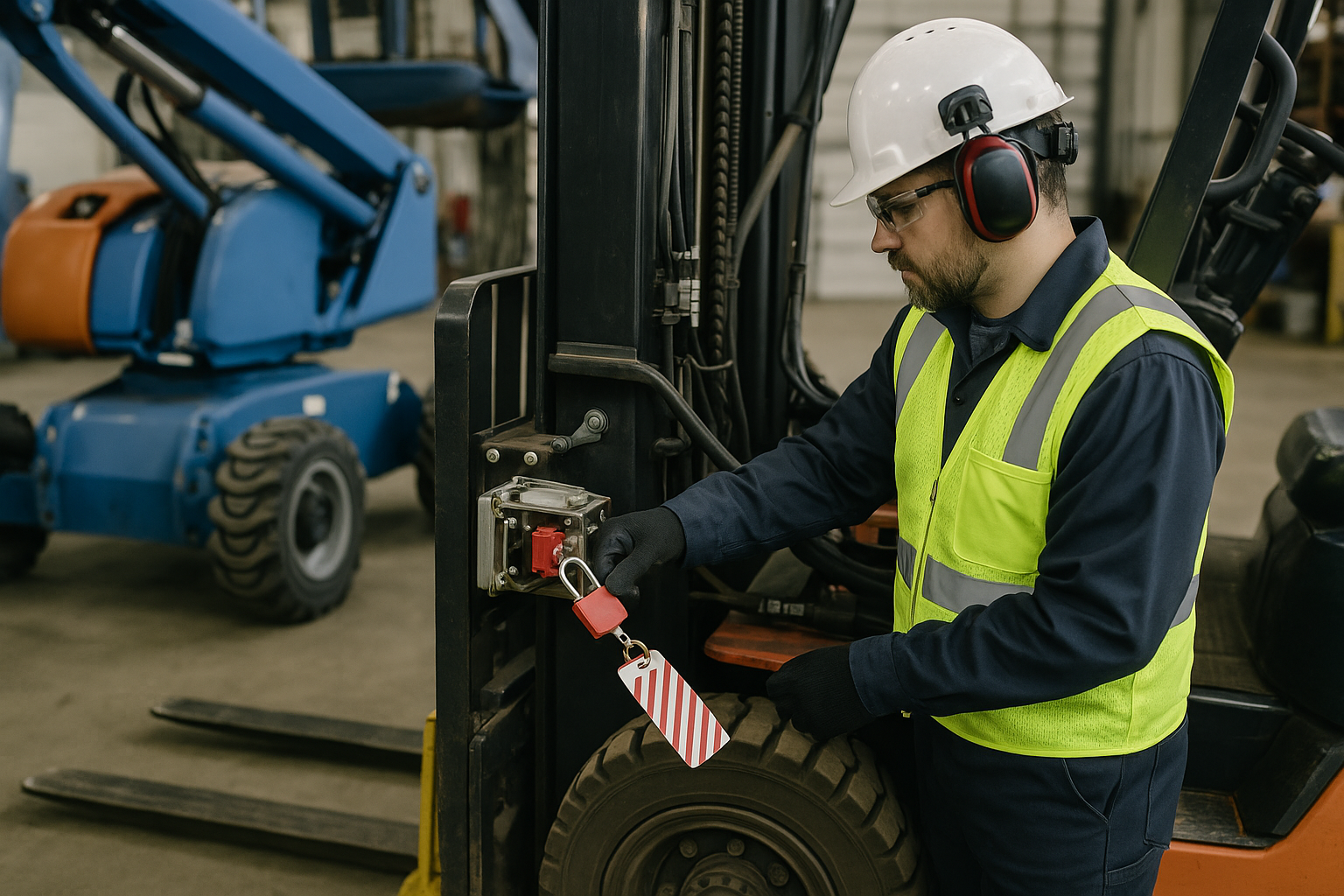
OSHA lockout/tagout for forklift and boom lift service: isolate hazardous energy, verify zero state, and use equipment-specific procedures.
Published: August 4, 2026 · By Steven Brooks
Updated: August 9, 2026
Category: Industrial Safety
Frequently Asked Questions
Do forklifts always require lockout/tagout before work?
No. OSHA LOTO applies during servicing and maintenance when unexpected startup, movement, electrical release, hydraulic motion, or stored energy could injure someone. Normal driving, parking, and routine operation are different unless a worker is exposed to a danger zone.
Is removing the key enough to lock out a forklift or boom lift?
Usually not by itself. Mobile equipment often has battery, hydraulic, stored mechanical, gravity, or other energy sources that must also be isolated, secured, or released.
What energy sources should be considered on a boom lift?
The article recommends checking battery, engine or hybrid electrical systems, hydraulic pressure, gravity hazards from elevated components, stored energy in accumulators or loaded parts, and secondary control stations.
Do forklift and boom lift LOTO procedures need to be equipment-specific?
In practice, yes. The article explains that generic instructions are often not enough because technicians need the exact disconnects, valves, blocking points, and verification steps for each machine.
How often do LOTO procedures need periodic inspection?
Under 1910.147, energy-control procedures need periodic inspection at least annually. The inspection should confirm the procedure still matches the machine and that employee responsibilities remain effective.