Group Lockout Across Shifts: Who Controls the Key in 24/7 Operations?
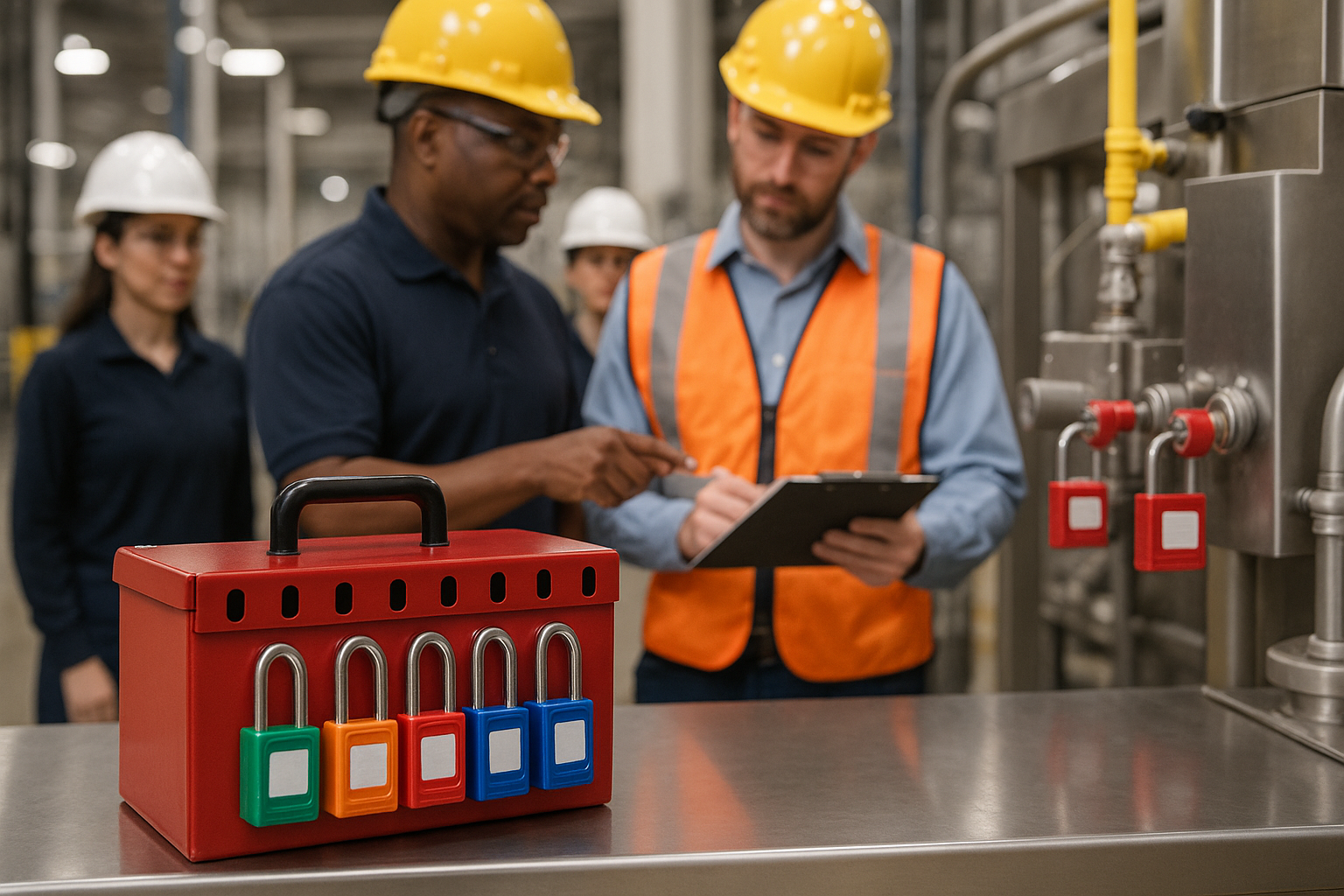
Group lockout across shifts hinges on key control, formal handoffs, and continuous protection under 29 CFR 1910.147(f)(3).
Published: June 27, 2026 · By SafetyNet Editorial Team
Category: Industrial Safety
Frequently Asked Questions
Who should control the key during a group lockout across shifts?
The post says key control should come from the procedure, not an informal handoff or one person’s memory. In a typical setup, primary keys are secured in a group lock box and cannot be accessed until all required personal locks are removed under the procedure.
What does OSHA require for group lockout on multi-shift work?
OSHA allows group lockout when the employer uses a procedure that gives each authorized employee protection equivalent to applying their own lock. The post emphasizes that this protection has to continue through shift and personnel changes.
How should shift changes be handled during a group lockout?
Incoming authorized employees should verify the isolation condition and apply their personal locks before outgoing employees remove theirs. The handoff should be documented, and if anything is unclear, the team should stop and re-verify isolation before work continues.
What usually goes wrong with group lockout in 24/7 operations?
The post points to failures like outgoing workers removing locks too early, supervisors assuming continuity without verification, and contractors using a different lockout method than host employees. It also warns about poor documentation, unverified isolation points, and informal handling of testing or temporary energization.
What should a defensible multi-shift group lockout procedure include?
The procedure should define who applies primary isolation locks, where keys are secured, who coordinates each shift, and how verification and handoffs are done. It should also include equipment-specific steps, contractor coordination, rules for testing or temporary re-energization, training that matches actual operations, and periodic inspections.