Heat Stress: Listening to Your Body Before It Becomes an Emergency
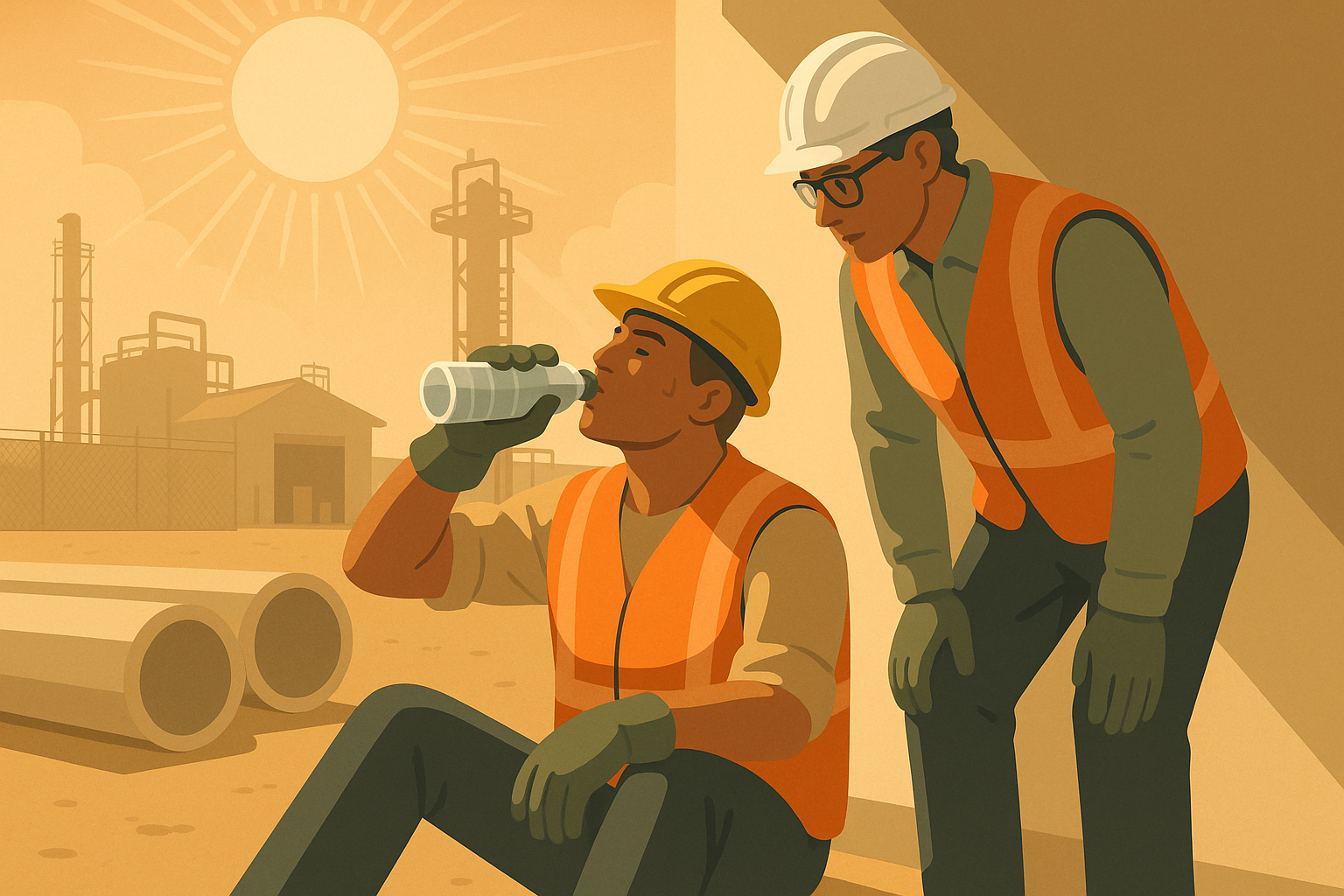
Heat stress often shows warning signs first. Help crews recognize symptoms, report them early, and use acclimatization and stop-work authority.
Published: May 25, 2026 · By SafetyNet Editorial Team
Updated: June 27, 2026
Category: OSHA Quick Talks
Frequently Asked Questions
What are the early warning signs of heat stress workers should report?
The post says early signs can include headache, dizziness, nausea, muscle cramps, unusual fatigue, heavy sweating, and confusion. Workers should report these symptoms right away in themselves or others.
What should a supervisor do if a worker shows signs of heat stress?
Supervisors should respond immediately with shade, rest, and water. They should also get medical help when needed.
Who is at higher risk for heat illness on the job?
The post highlights new workers and employees returning after time away as higher risk. Heat illness can also escalate faster during hot, humid days and heavy physical work.
How can we reduce heat stress risk as conditions get worse?
Use acclimatization plans and adjust schedules, work pace, and break frequency when heat conditions worsen. A strong program should also include emergency response and observation of higher-risk workers.
Why is stop-work authority important for heat stress prevention?
The post says crews need to feel supported to speak up before heat illness becomes an emergency. Clear stop-work authority helps create a culture where reporting symptoms is expected, not discouraged.