Hexavalent Chromium in Welding: Audit Cr(VI) Controls Before OSHA Shows Up
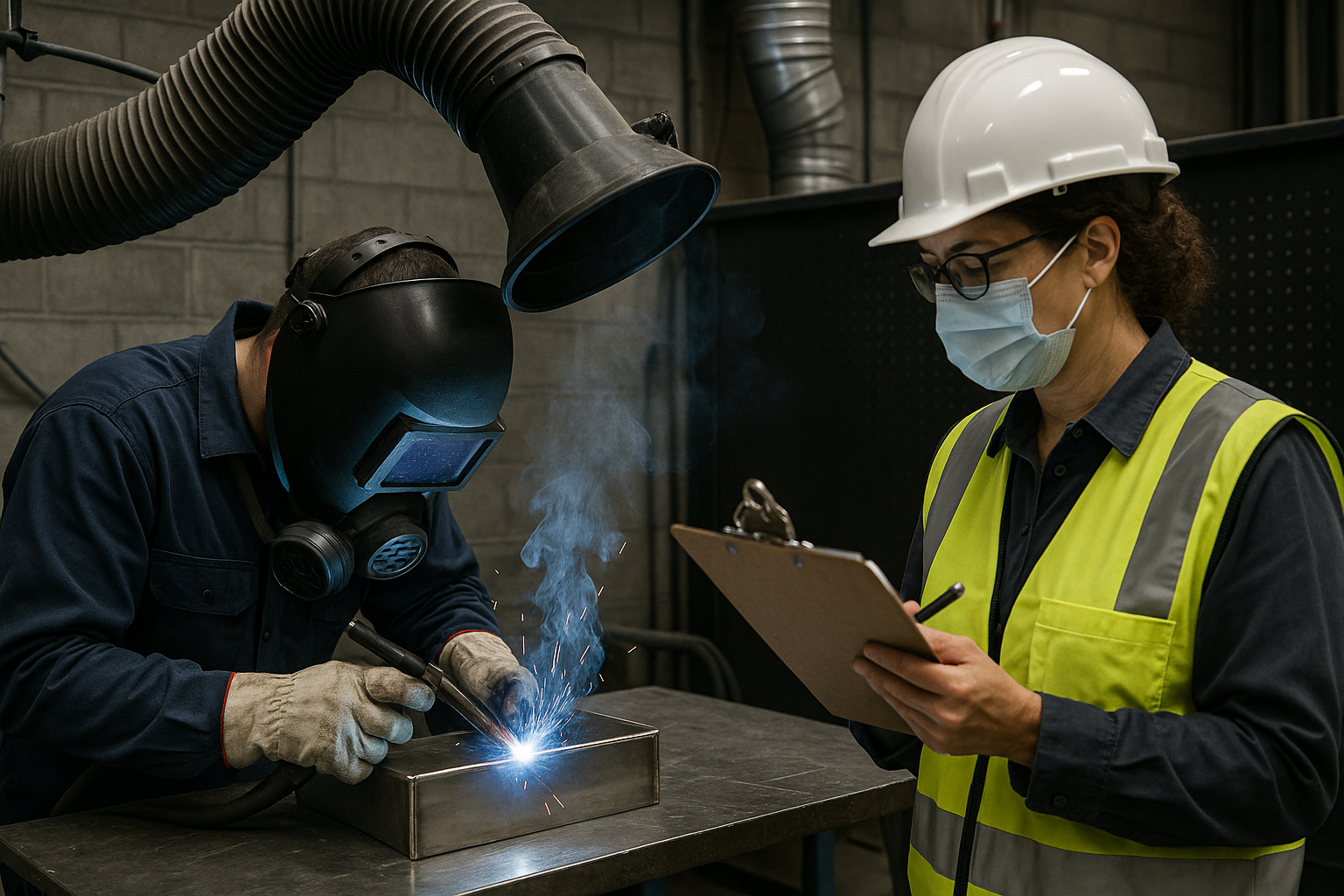
Audit Cr(VI) controls before OSHA arrives: verify exposure data, respirators, medical surveillance, regulated areas, and training for welding work.
Published: July 14, 2026 · By Steven Brooks
Updated: August 9, 2026
Category: Industrial Safety
Frequently Asked Questions
Can we use objective data instead of new air sampling for hexavalent chromium?
Yes, but only if the data truly matches your actual welding tasks, materials, ventilation, and work practices. If it does not reflect current conditions, it should not be your basis for compliance.
What parts of a Cr(VI) program does OSHA usually connect during an inspection?
Inspectors often compare exposure determination with engineering controls, respirator use, regulated areas, medical surveillance, and training. If those pieces do not tell the same story, that inconsistency can become a citation issue.
Do regulated areas only apply to the welder doing the job?
No. Shops should also consider helpers, nearby employees, and other trades who may enter the exposure zone or work close to the plume.
What is the first step in a pre-inspection Cr(VI) audit?
Start on the shop floor by identifying where chromium-generating work actually happens and how ventilation and work practices are being used. Then compare what you observed to your monitoring, respirator, medical, and training records.
Why is hazard communication part of chromium compliance?
Because chromium hazards can be missed if SDSs, labels, and purchasing information are not organized. Strong hazard communication supports better job setup, worker awareness, and training around chromium-containing materials and fumes.