High-Voltage Clearances: Practical Compliance for Crane Work Near Power Lines
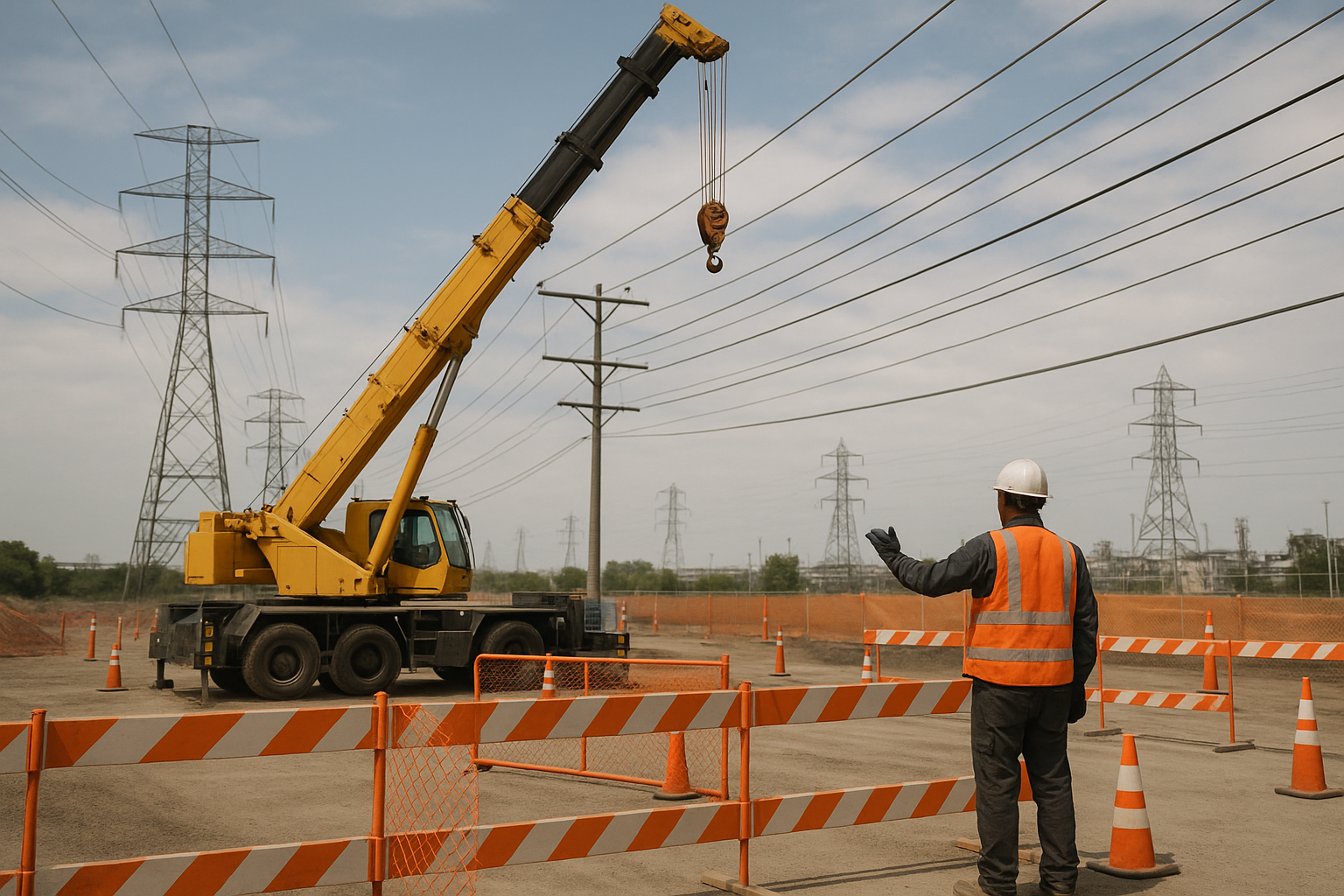
Use OSHA 29 CFR 1926.1408 to plan crane work near power lines, with clear roles, lift controls, utility coordination, and stop-work triggers.
Published: June 24, 2026 · By SafetyNet Editorial Team
Updated: June 27, 2026
Category: Industrial Safety
Frequently Asked Questions
What standard should we use as the baseline for crane work near power lines?
Use OSHA 29 CFR 1926.1408 as the field baseline because it directly covers cranes and derricks operating near power lines. The post recommends building those clearance requirements into lift plans, pre-task plans, and site layout before work starts.
How does ASME B30.5 help with crane clearances near power lines?
ASME B30.5 helps shape the operating practices around OSHA minimums, including roles, communication, crane configuration, and stop-work controls. The post suggests using OSHA for the non-negotiable minimums and ASME B30.5 for how the team will work within them consistently.
Does NFPA 70E replace OSHA crane clearance rules near overhead lines?
No. The post says OSHA 1926.1408 governs crane proximity to power lines on construction sites, while NFPA 70E supports broader electrical hazard planning and coordination.
When should we stop crane work near power lines?
Stop work when actual site conditions make the planned clearance unreliable. The post gives examples such as poor visibility, uneven ground, wind, congestion, layout changes, and sequencing changes that could affect clearance.
What should be included in a crane lift plan when power lines are nearby?
The post says the plan should address line ownership and voltage, crane setup area, swing radius, load path, overhead line locations, communication methods, and stop-work triggers. It also recommends controls such as dedicated spotters, barricades, visual markers, exclusion zones, and contingency planning if conditions change.