How AI and Risk Pressure Field Heat Maps Will Reshape Safety Management
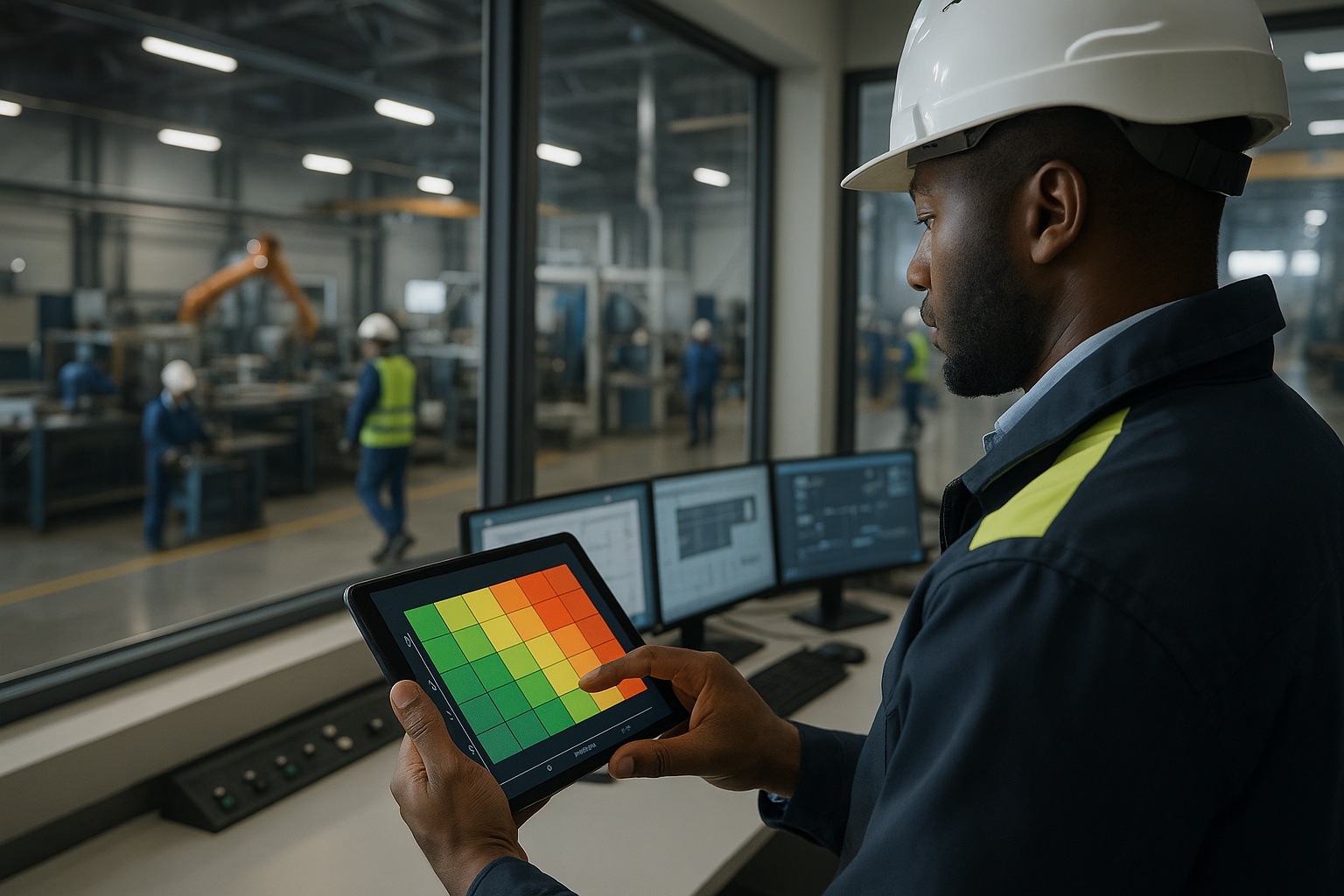
Learn how AI and Risk Pressure Field heat maps help EHS teams spot rising risk sooner by connecting incidents, inspections, and training gaps.
Published: July 22, 2026 · By Steven Brooks
Updated: August 9, 2026
Category: Industrial Safety
Frequently Asked Questions
What is a Risk Pressure Field heat map in safety?
It is a way to visualize where risk is building across a site, process, or task by combining signals like incidents, near misses, inspection findings, overdue actions, and training gaps. The goal is to help teams act before a more serious event occurs.
Can AI predict workplace incidents on its own?
No. AI can flag patterns and rising risk, but it still depends on good reporting, consistent inspections, complete records, and human review in the field.
What data should feed a predictive safety heat map?
The article recommends using incidents, near misses, audits, inspections, corrective actions, compliance tasks, and training records. The more consistent and centralized that data is, the more useful the heat map becomes.
How should a safety manager use a predictive heat map?
Use it to prioritize where to look first, what actions to assign, and whether risk drops after controls are put in place. It should guide field verification and follow-through, not replace them.
Why is AI likely to grow in industrial safety?
Because EHS teams are managing more data across more sites with limited time. AI helps connect weak signals across reports, inspections, action items, and training gaps so leaders can intervene earlier.