Light Curtains vs Interlocks vs Two-Hand Controls in 2026
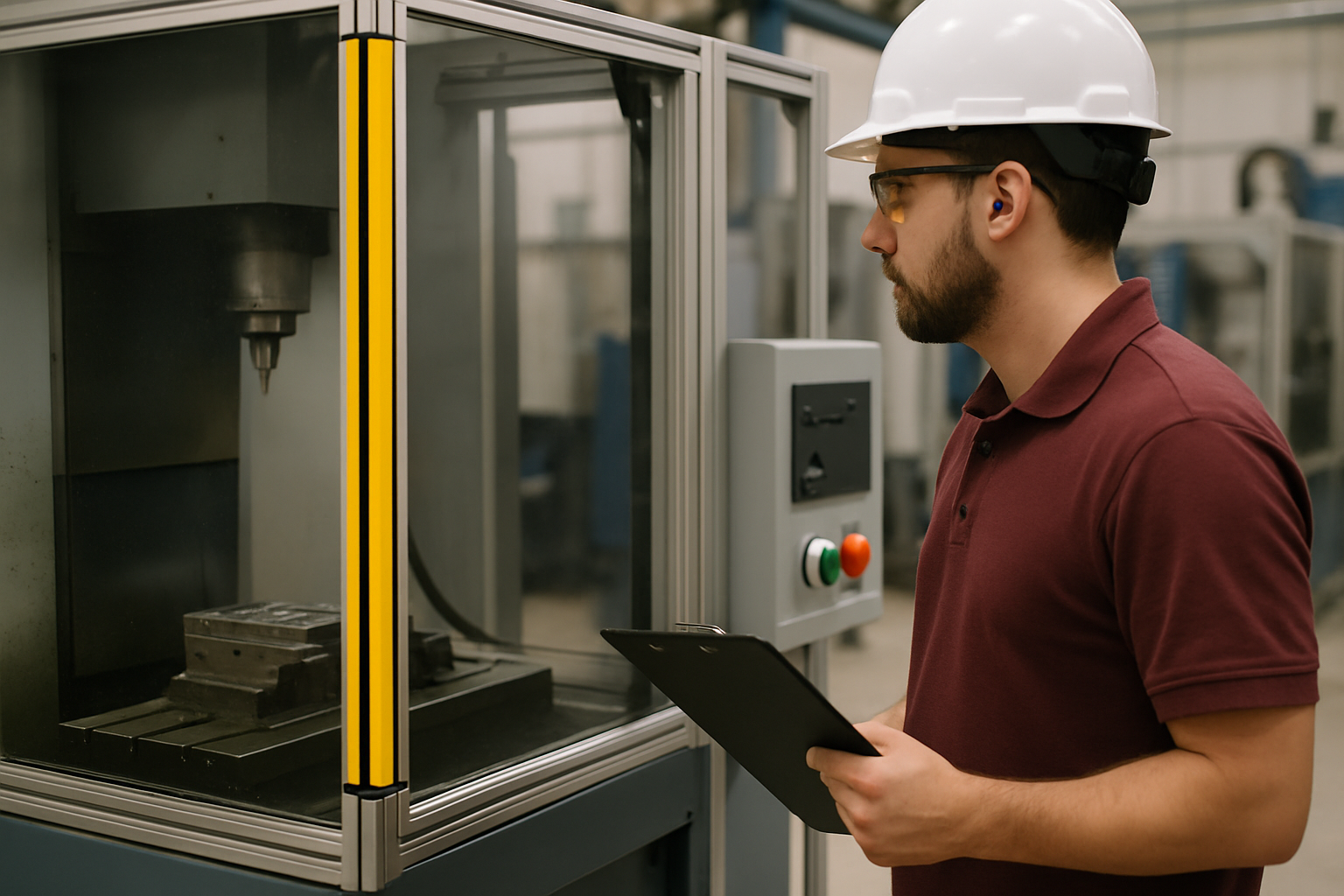
Choose light curtains, interlocks, or two-hand controls based on task, access pattern, and stopping time. Compare safeguards for OSHA machine guarding.
Published: July 27, 2026 · By Steven Brooks
Updated: August 9, 2026
Category: Industrial Safety
Frequently Asked Questions
Are safety light curtains OSHA compliant by themselves?
They can be, but only if they effectively protect the hazard for the task. If workers can reach the danger area before the machine stops or access the hazard around the sensing field, a light curtain alone is not enough.
When should I use an interlock instead of a light curtain?
Use an interlocked guard when access must be controlled through a door, gate, or movable guard and physical separation is needed. They are especially useful for enclosures and perimeter guarding where opening the guard must stop or make the hazard safe.
Do two-hand controls replace machine guards?
Not by themselves. Two-hand controls can help keep one operator’s hands out of the point of operation during a cycle, but they do not address side, rear, or second-person access.
Does an interlock replace lockout/tagout?
No. Interlocks support production safety, but servicing, maintenance, and tasks involving hazardous energy still need to be evaluated under lockout/tagout requirements.
What is the best way to choose the right point-of-operation safety device?
Start with a task-by-task review of how the machine is actually used, including loading, setup, jam clearing, and maintenance. Then identify hazards, rank the risk, and match the safeguard to the real access pattern and stopping behavior.