Medical Gas Safety: What NFPA 99 and Daily Rounds Should Catch
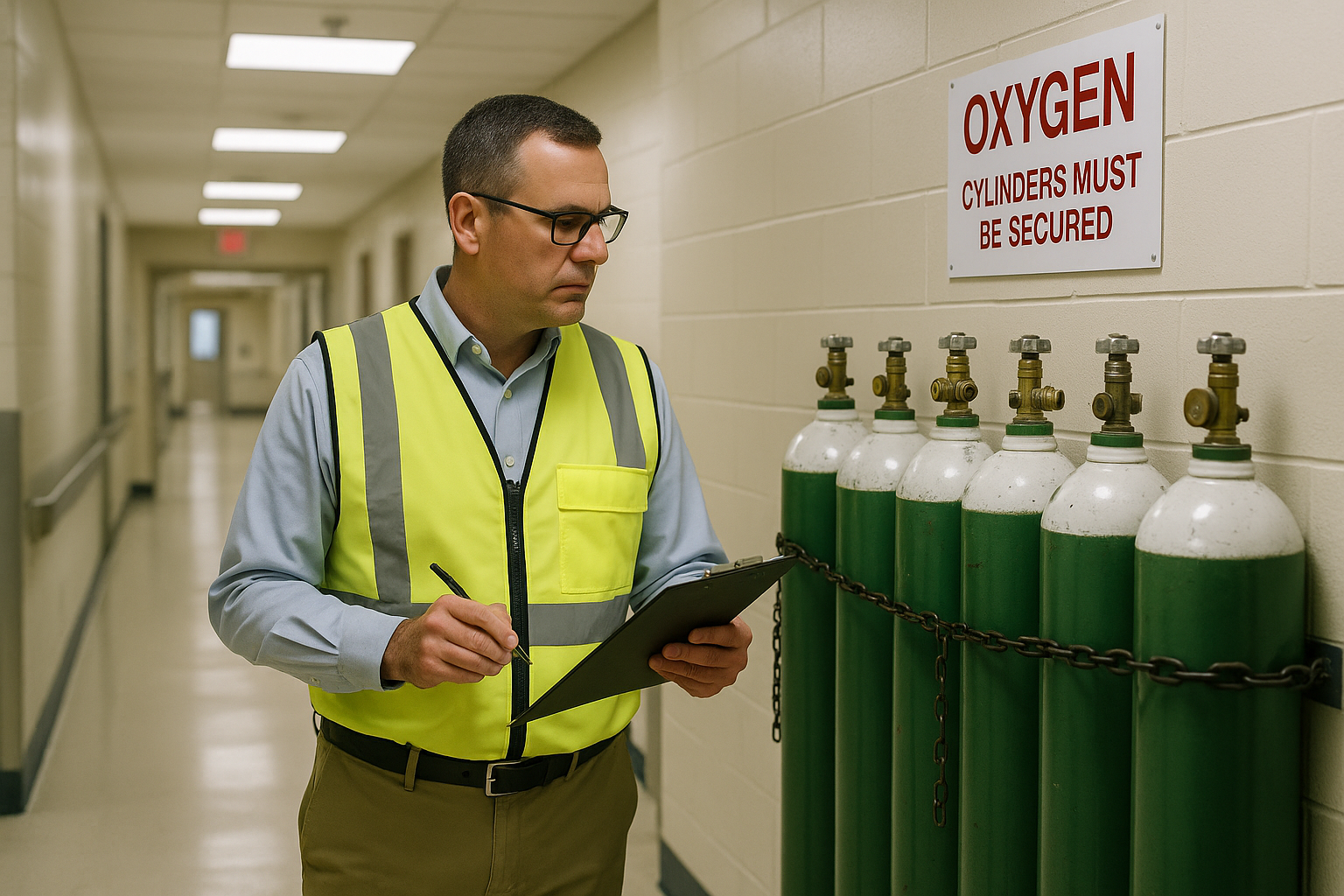
Strengthen medical gas safety with daily rounds that verify oxygen storage, shutoff access, cylinder handling, and ignition-source control.
Published: June 29, 2026 · By SafetyNet Editorial Team
Category: Industrial Safety
Frequently Asked Questions
What should daily rounds focus on for medical gas safety?
Daily rounds should focus on oxygen storage, cylinder security, manifold room conditions, shutoff access, and ignition-source control. The goal is to catch visible problems before they can contribute to a fire or oxygen-enriched atmosphere event.
Why is oxygen so dangerous if it is not a fuel?
Oxygen can make materials ignite more easily and burn more intensely. In patient care areas, that means common combustibles and routine ignition sources can create a much more severe fire.
What are the most important checks in cylinder storage areas?
Verify cylinders are secured, full and empty cylinders are separated, signage is present, and the room is free of clutter and unrelated combustible storage. Also look for damaged equipment, contamination, and blocked access.
Why do shutoff valves need to be part of routine inspections?
A shutoff that is blocked, poorly labeled, or unfamiliar to staff may not be usable during an emergency. Routine checks help confirm valves are accessible and that emergency roles are clear.
Which standard is most relevant for healthcare medical gas systems?
NFPA 99 is the key consensus standard for healthcare medical gas systems. It applies to areas such as storage, manifolds, shutoff valves, and operational safeguards.