NFPA 99-2024: Practical Safety Updates Hospital Engineering Teams Need
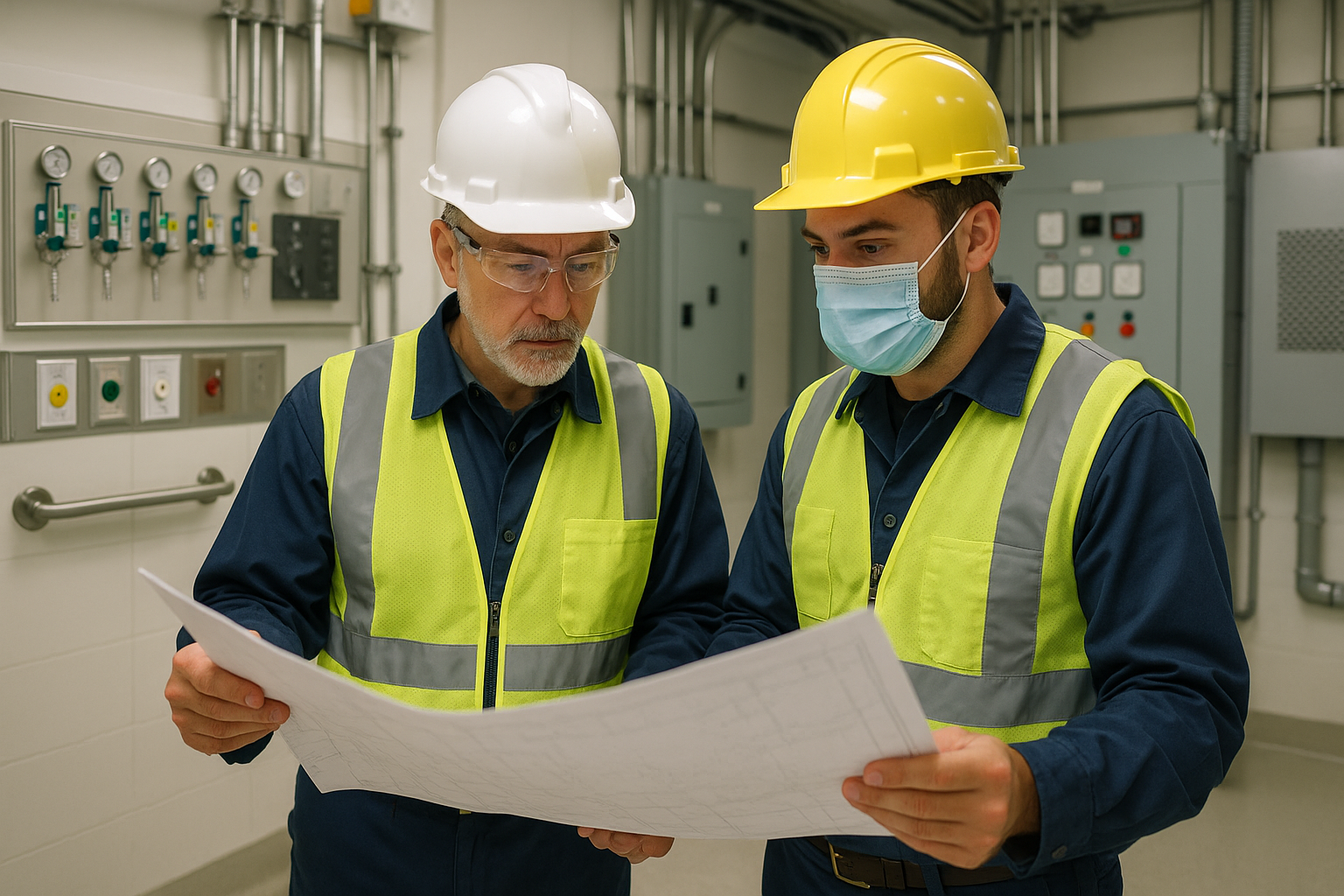
NFPA 99-2024 helps hospital engineering teams tighten medical gas, electrical safety, and risk-based maintenance in occupied care areas.
Published: June 29, 2026 · By SafetyNet Editorial Team
Category: Industrial Safety
Frequently Asked Questions
Does NFPA 99-2024 mainly affect facilities, or clinical engineering too?
Both. The article explains that NFPA 99 should be treated as an operational document that affects infrastructure, patient-care equipment support, and the coordination between facilities, clinical engineering, EHS, and clinical operations.
What is the first thing to review for medical gas compliance?
Start with roles, shutdown procedures, testing, and return-to-service controls. The article also recommends checking valve labeling, drawings, alarm response expectations, and contractor turnover documentation.
How does NFPA 99 connect to electrical safety work in hospitals?
It works alongside NFPA 70 and supports safe management of patient care spaces, essential electrical systems, and maintenance activities. The article recommends reviewing space classifications, isolation planning, outage procedures, and current system documentation.
What does risk-based maintenance mean in practice?
It means maintenance decisions should be based on patient-care risk, life safety significance, and failure consequence. The article advises using a documented process for intervals, escalation triggers, completion records, and periodic validation.
How can hospitals apply NFPA 99 updates without disrupting care?
Use a coordinated field process that includes pre-job risk review, permit controls, interim safeguards, shift communication, and formal closeout. The article emphasizes that occupied-care execution is just as important as the technical repair.