OSHA 1910.146: Using ANSI Z117.1 and NFPA Standards in Confined Space Programs
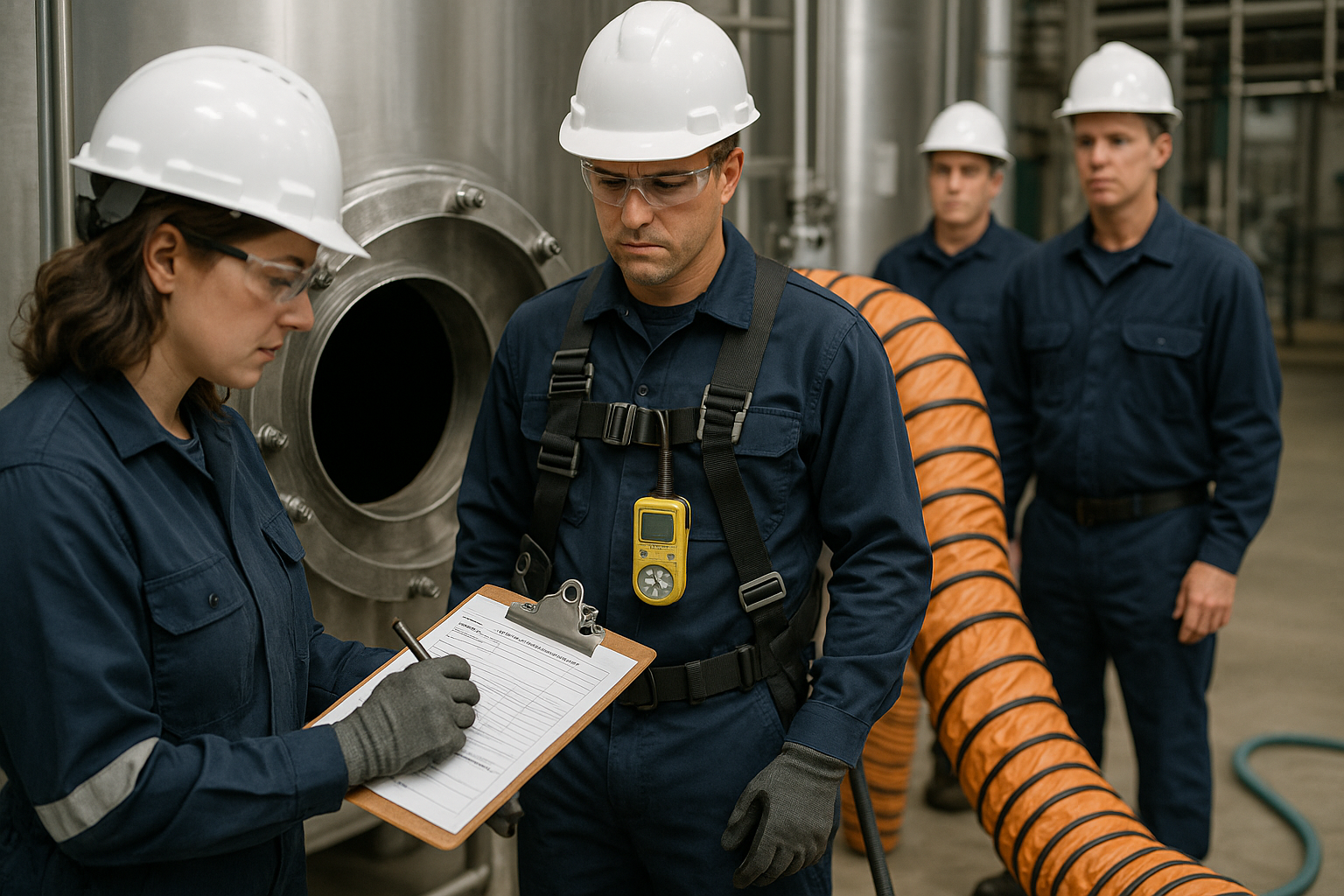
Use OSHA 1910.146 as the baseline, then apply ANSI/ASSP Z117.1 and NFPA standards to strengthen confined space hazard review and rescue planning.
Published: June 23, 2026 · By SafetyNet Editorial Team
Updated: June 27, 2026
Category: Industrial Safety
Frequently Asked Questions
Is the confined space permit form enough to meet OSHA 1910.146?
No. The post says a common mistake is treating the permit as the whole program. The permit is only one control tool, and safe entry also depends on hazard evaluation, isolation, rescue planning, training, and contractor coordination.
How does ANSI/ASSP Z117.1 help improve a confined space program?
It adds more practical direction on how to manage confined space work. The post says it helps strengthen pre-entry hazard analysis, equipment selection, rescue planning, ventilation decisions, and role-specific training and drills.
When do NFPA standards apply to confined space work?
They become relevant when the space involves overlapping hazards such as hot work, flammable atmospheres, combustible dust, electrical hazards, emergency response, or fire protection impacts. The post says the right NFPA reference depends on the task and the hazards present.
What should be included in an integrated confined space entry process?
The post recommends one field-ready process that includes space inventory and classification, job-specific hazard review, energy isolation, atmospheric testing, ventilation, added controls for special work, a space-specific rescue plan, contractor coordination, and a post-job review. The goal is to capture controls in the order crews actually work instead of using separate checklists.
What should EHS managers review in a 2026 confined space program update?
The post says to check whether space inventories, permits, equipment, rescue plans, training, and contractor procedures still match actual field conditions. It also recommends reviewing recent permits, walking representative spaces, testing rescue assumptions, and comparing current practice against OSHA 1910.146, ANSI/ASSP Z117.1, and applicable NFPA standards.