OSHA 1910.178 & ANSI B56.1: 2026 Forklift Inspection and Pedestrian Safety
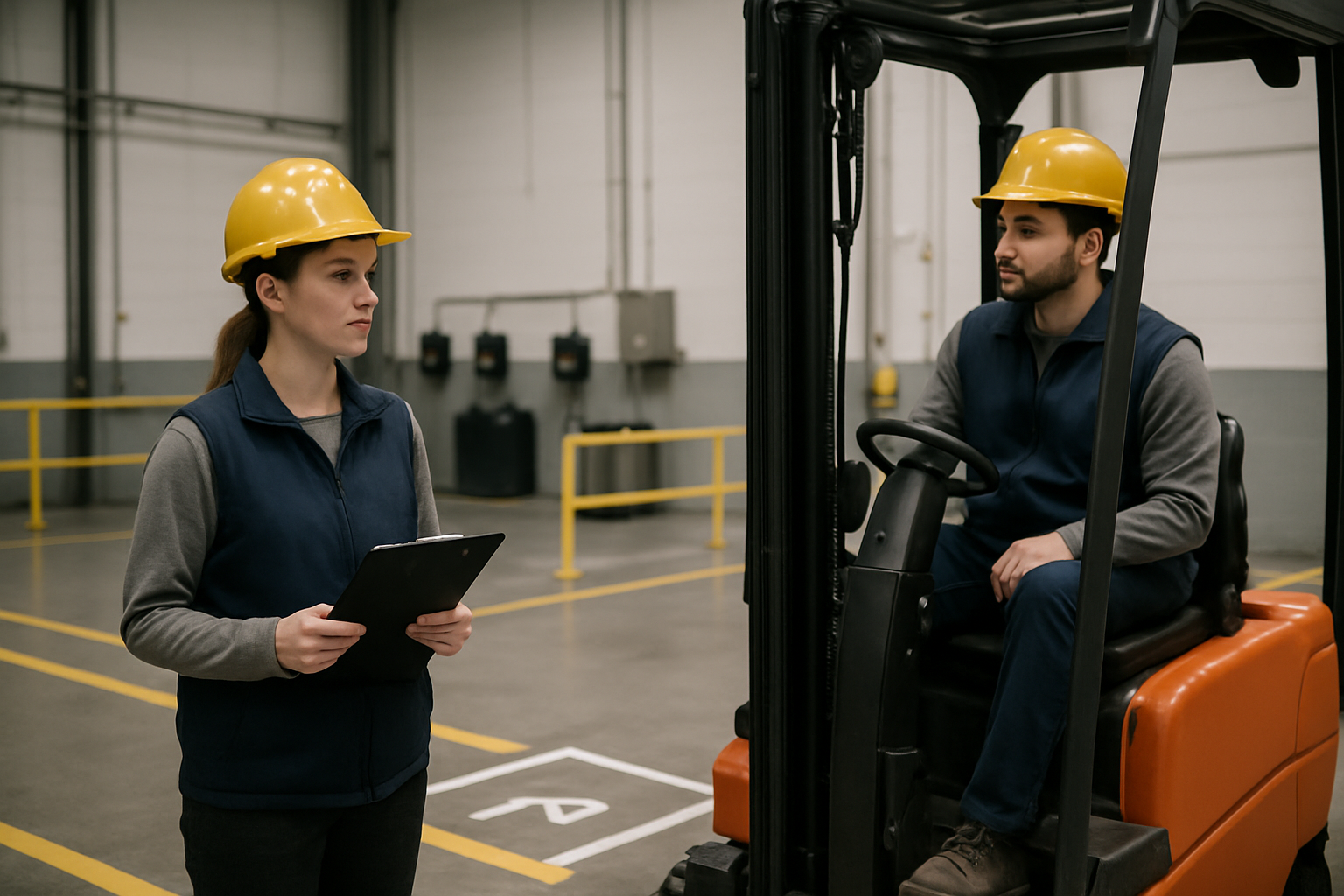
OSHA 1910.178 forklift inspection and pedestrian safety: daily checks, battery charging controls, and ANSI B56.1 traffic guidance for warehouses.
Published: August 3, 2026 · By Steven Brooks
Updated: August 9, 2026
Category: Industrial Safety
Frequently Asked Questions
Does OSHA require a daily forklift inspection log?
OSHA requires powered industrial trucks to be examined before being placed in service, and at least daily. A documented log is the practical way most employers prove the process is happening and that unsafe trucks are removed from service.
What should be on a forklift daily checklist?
A solid checklist covers truck condition and safety-critical functions such as brakes, steering, horn, lights, tires, forks, mast, hydraulics, seat belt, and battery or fuel-system condition. It should also capture defects clearly enough to support out-of-service decisions and repairs.
What are the main battery-charging hazards for forklifts?
The main concerns are fire, electrical, and chemical hazards. In practice, sites should review ventilation, ignition-source control, eyewash and washing facilities where needed, cable and connector condition, housekeeping, and employee training.
How do you separate pedestrians from forklifts in a warehouse?
Use layered controls rather than floor paint alone. Marked walkways, physical barriers, designated crossings, visibility improvements, speed rules, and restricted access to high-traffic zones all help reduce routine mixing of people and trucks.
How can a warehouse audit its forklift program effectively?
Review both the controls and the proof. Check daily inspection logs, out-of-service tagging, charging-area conditions, and live pedestrian routes, then document findings with photos and assign corrective actions with clear owners.