OSHA 1926.501 Fall Protection: How to Avoid Common Construction Violations
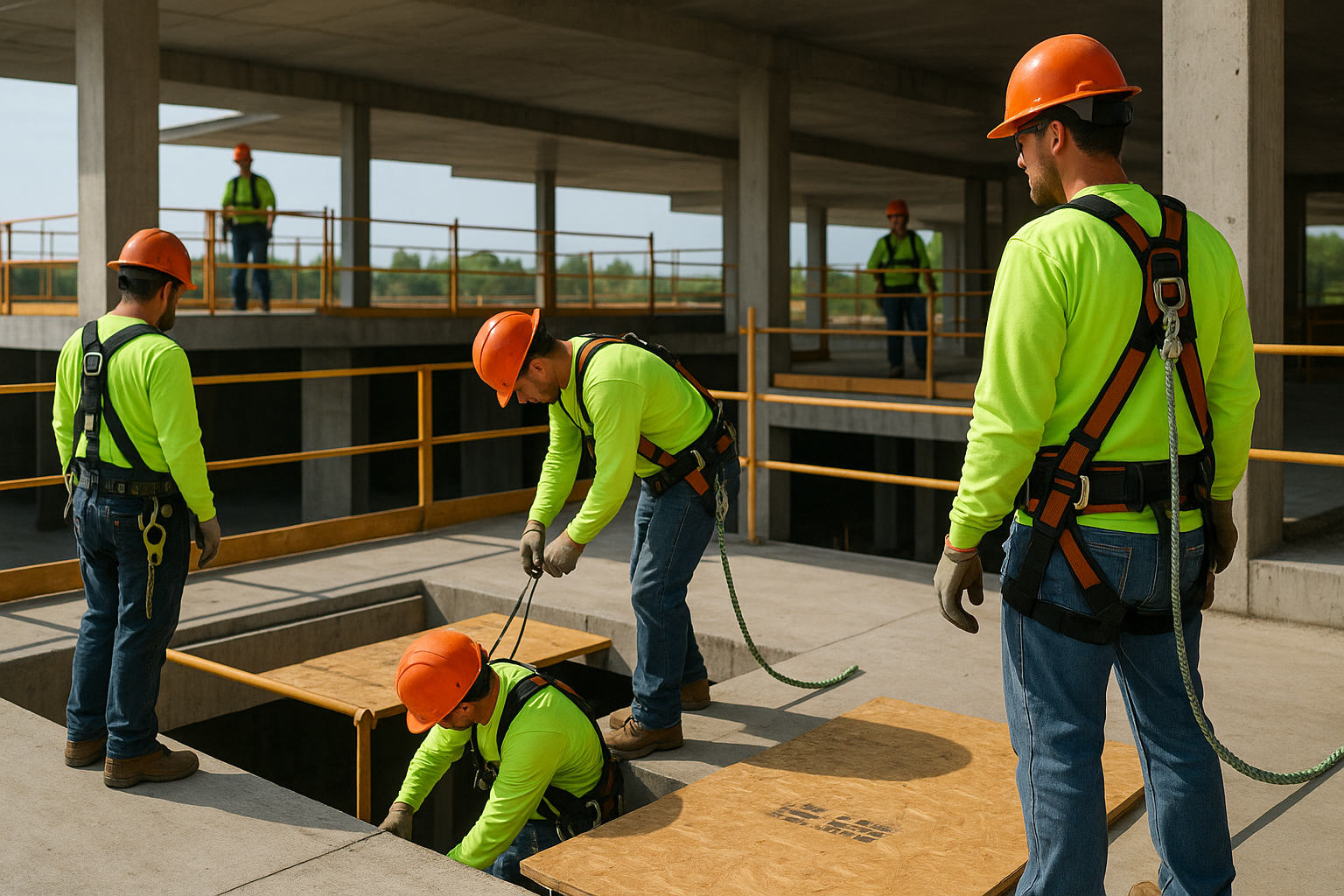
Avoid common OSHA 1926.501 fall protection violations with practical steps for planning, field audits, training, and supervisor follow-through.
Published: June 23, 2026 · By SafetyNet Editorial Team
Updated: June 27, 2026
Category: Industrial Safety
Frequently Asked Questions
What does OSHA 1926.501 require on a construction site?
It requires employers to protect workers exposed to fall hazards on walking-working surfaces, unprotected edges, holes, leading edges, excavations, and other elevated work areas. The protection method depends on the task, but the employer must provide and enforce appropriate protection.
What are the most common fall protection problem areas OSHA sees under 1926.501?
The post highlights unprotected sides and edges, holes and openings, leading edges, residential and light commercial work, and warning line misuse. These are common exposure points where a site walk can catch issues before they become injuries or citations.
Why do fall protection violations keep happening even when a company has a written program?
The post says field conditions often change faster than the plan, and crews do not adjust protection before work starts. Common gaps include weak pre-task planning, missing guardrails or covers, equipment problems, unapproved anchors, inconsistent subcontractor practices, and training that does not match the actual site setup.
What should an EHS manager audit first to reduce 1926.501 exposure quickly?
Start with active elevated work and check where workers can reach unprotected edges, whether holes and skylights are covered or guarded, and whether any guardrails or covers have been removed. Also verify personal fall arrest systems, subcontractor alignment, supervisor corrections, and whether the daily pre-task plan addresses current fall hazards.
How can we make our fall protection program hold up in the field?
The post recommends task-specific planning, having equipment and anchors ready before the shift, daily checks, and stopping work when protection is missing or incomplete. Training should be job-specific and tied to the actual site conditions, not just the written rule.