OSHA, NFPA, and ANSI Requirements for Wastewater Utility Plant Safety in 2026
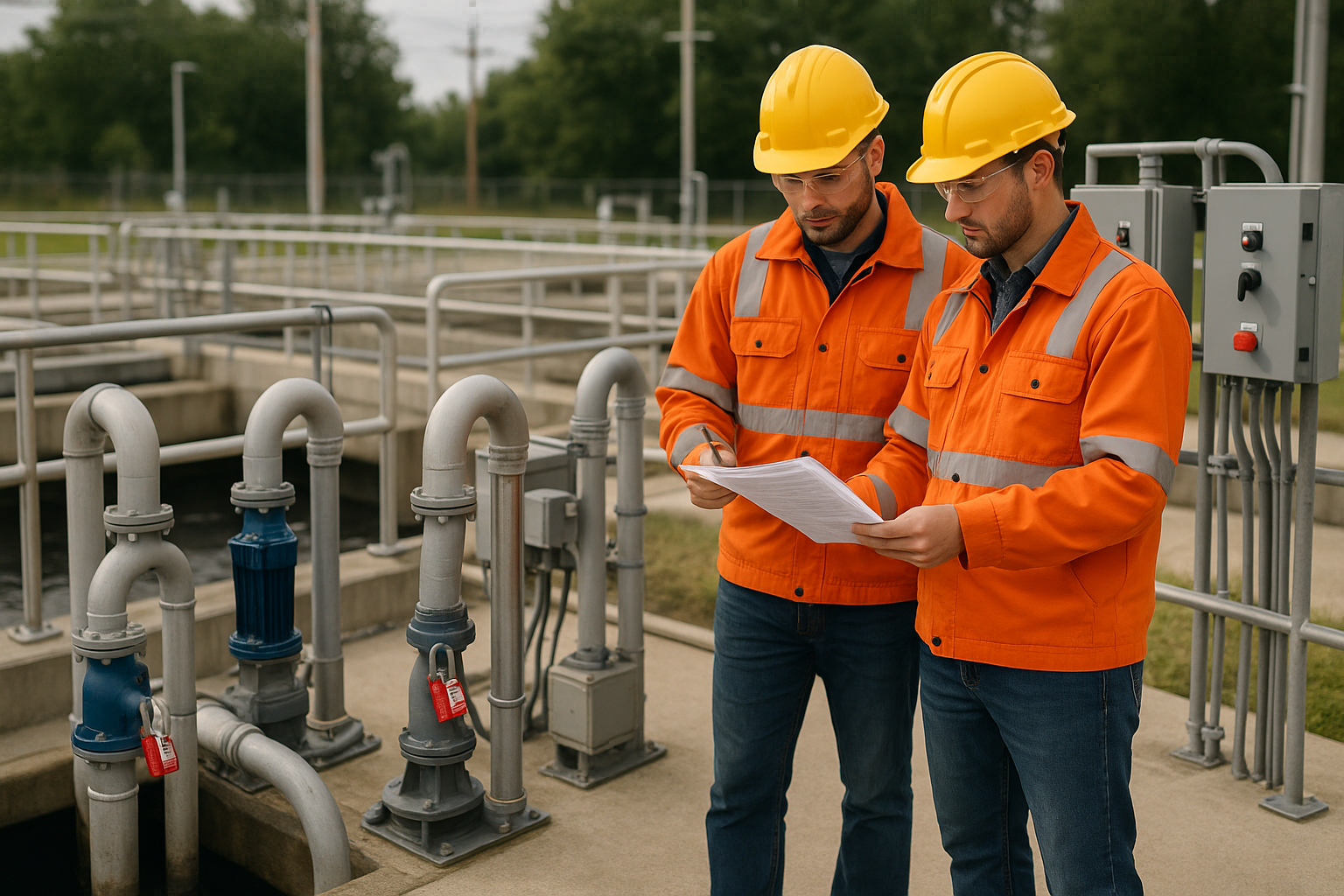
Learn how OSHA, NFPA, and ANSI requirements shape wastewater utility plant safety in 2026, from confined spaces and LOTO to electrical and chemical controls.
Published: July 1, 2026 · By SafetyNet Editorial Team
Updated: August 9, 2026
Category: Industrial Safety
Frequently Asked Questions
Which OSHA rules matter most in a wastewater utility plant?
The article highlights confined spaces, hazardous energy control, electrical safe work practices, hazard communication, PPE, and respiratory protection as the core OSHA areas for most plants. These rules often apply to the same maintenance or operating task.
Does NFPA 70E apply in a wastewater plant?
Yes. The article explains that NFPA 70E supports OSHA electrical safe work practice requirements for tasks like panel access, troubleshooting, testing, and PPE selection.
Why is lockout/tagout such a big issue in wastewater operations?
Because pumps, screens, presses, valves, and similar equipment can involve multiple energy sources. The article stresses equipment-specific procedures, isolation verification, and keeping documents aligned with current field conditions.
What should a wastewater confined space program include?
It should include space identification, permit-required determinations, entry procedures, atmospheric testing, ventilation, rescue planning, contractor coordination, and role-specific training. The article also emphasizes that monitoring and isolation must match the actual work being performed.
How should EHS managers use ANSI standards in this setting?
The article recommends using ANSI standards as practical support for OSHA compliance, especially for hazardous energy control and respiratory protection. They help turn broad requirements into field-ready procedures and work practices.