Powered Industrial Truck Inspections: Aligning OSHA, ANSI, and NFPA 505
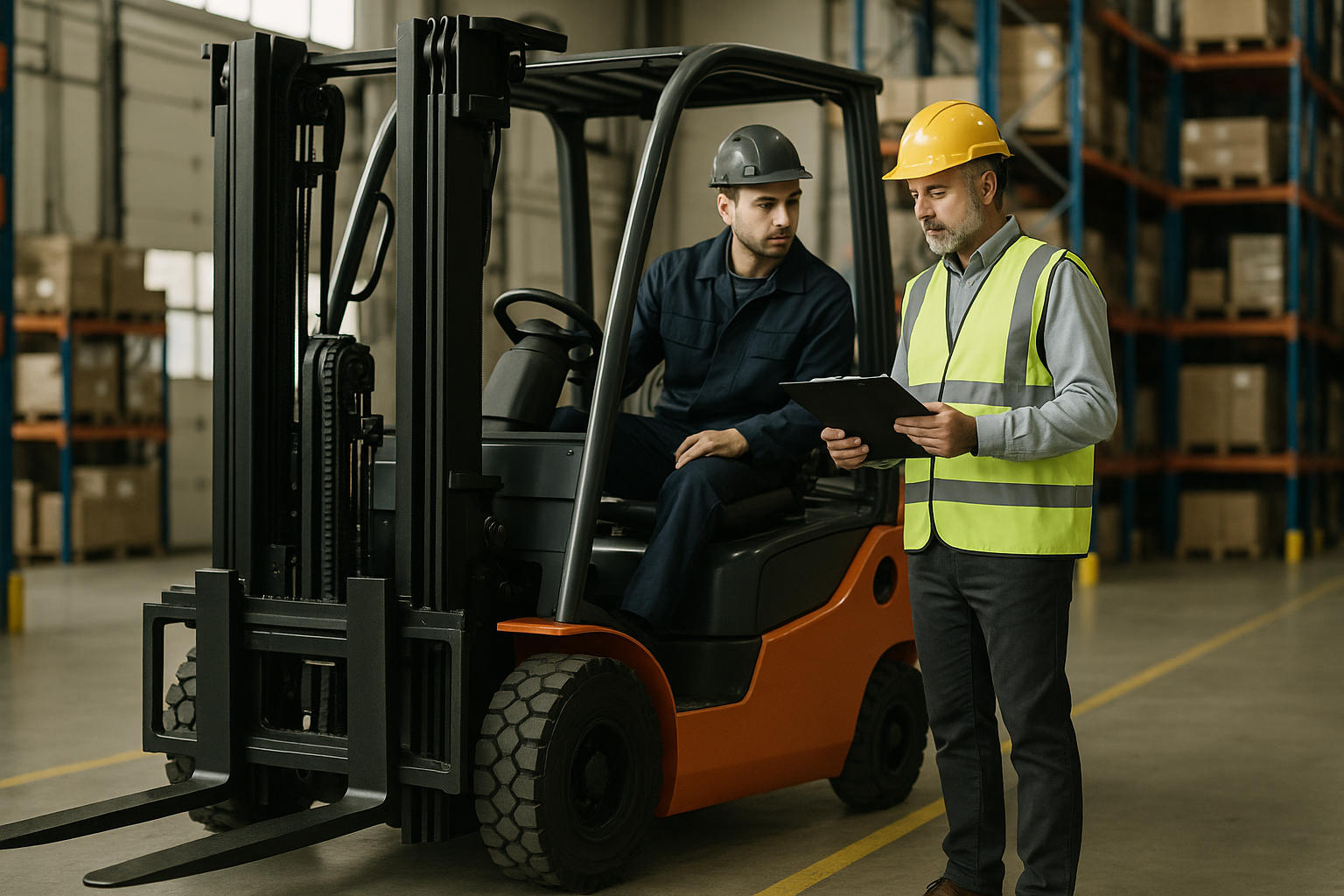
Align powered industrial truck inspections with OSHA 29 CFR 1910.178, ANSI/ITSDF B56.1, and NFPA 505 for safer fleet decisions.
Published: June 24, 2026 · By SafetyNet Editorial Team
Updated: August 9, 2026
Category: Industrial Safety
Frequently Asked Questions
How often do forklifts need to be inspected?
The post says trucks must be examined before being placed in service. In practice, that means pre-use checks before each shift, or before use when trucks are used intermittently.
When should a forklift be taken out of service?
A truck should be removed from service if the examination shows any condition that adversely affects safe operation. The post also recommends having clear out-of-service criteria for safety-critical defects.
Who should be allowed to repair and return a forklift to service?
Operators should identify and report issues, but only authorized personnel should perform repairs and adjustments. The program should also define who can tag out, evaluate, and release a truck back into service.
What should be included in a forklift pre-use inspection?
The post lists common items such as tires and wheels, forks, mast, chains, attachments, steering, brakes, warning devices, hydraulic leaks, battery or fuel system condition, seat belt, operator compartment, and data plate legibility. It also says the checklist should match the truck class and actual site conditions.
Why does NFPA 505 matter for forklift inspections?
NFPA 505 helps confirm that the truck’s type and fire-safety designation fit the hazards in the area where it operates. A truck can be mechanically sound and still be the wrong truck for locations with flammable vapors, gases, dusts, fibers, battery charging concerns, or mixed process and warehouse traffic.