Roadway Work Zones in 2026: What DOT’s Safety Push Means for Contractors
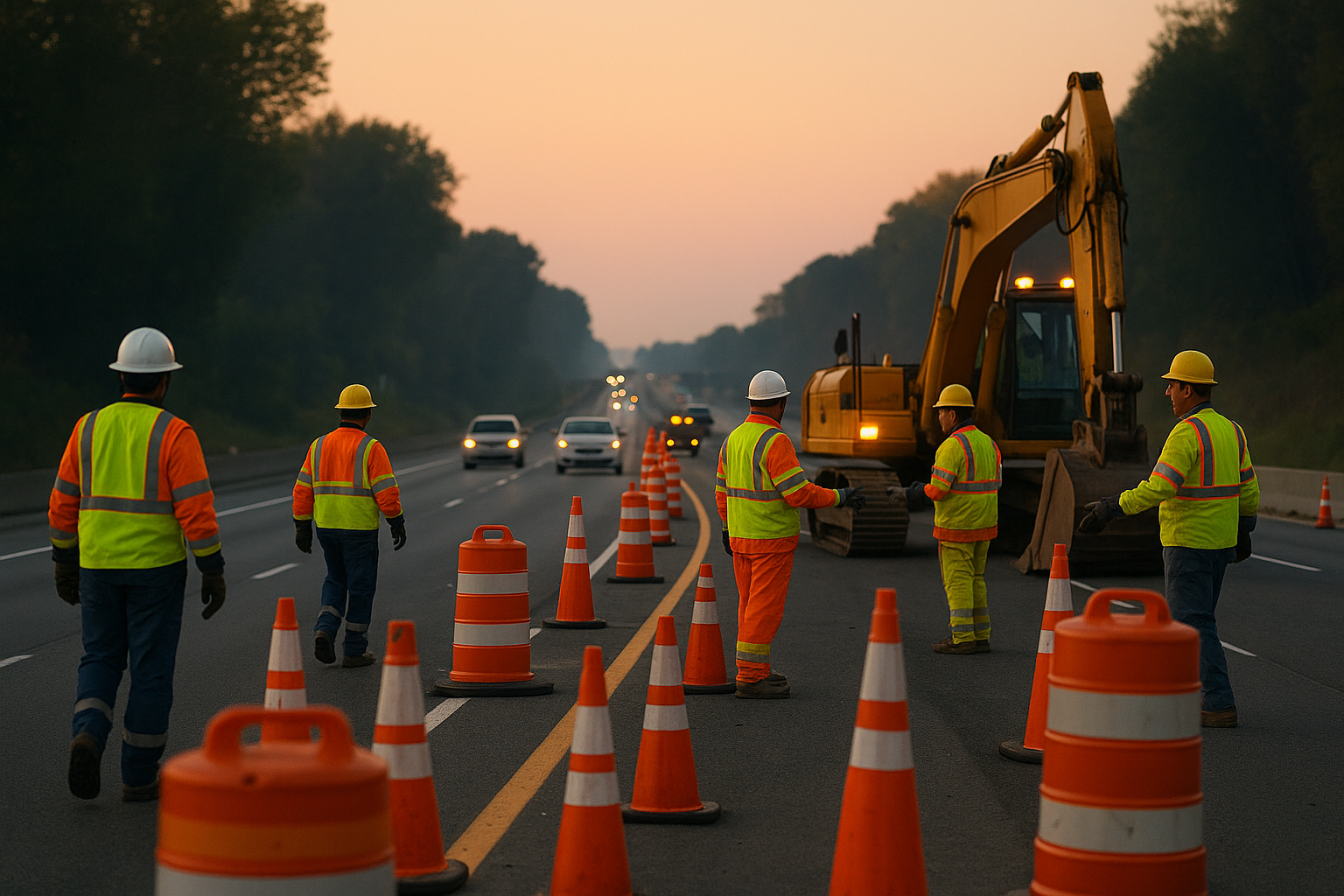
DOT’s work-zone safety push means tighter traffic control, stronger worker-vehicle separation, and better subcontractor coordination on highway projects.
Published: June 28, 2026 · By SafetyNet Editorial Team
Updated: August 9, 2026
Category: Industrial Safety
Frequently Asked Questions
Does DOT’s recent work-zone safety push create brand-new rules for contractors?
Not necessarily. The bigger impact is stronger attention to how existing work-zone controls are planned, implemented, and coordinated in the field.
What is the first thing a highway contractor should review on an active project?
Start with the temporary traffic control setup and compare it to actual field conditions. Then review how workers and construction vehicles are separated inside the work area.
Why is internal vehicle separation such a big issue in work zones?
Because serious exposure does not end once crews are inside the barrels. Construction trucks, equipment, delivery vehicles, and workers on foot often share tight space unless routes and exclusion zones are clearly defined.
What should prime contractors require from subcontractors in a roadway work zone?
They should require clear routes, staging plans, access points, and communication protocols. Subcontractors also need to understand who controls traffic changes and what stop-work expectations apply.
How should contractors handle work-zone changes during night work or weather shifts?
They should treat those conditions as a trigger to re-check visibility, device condition, traffic flow, and worker exposure. The plan should be adjusted to match the changed risk, not left on autopilot.