Roof Fall Clearance Failure in 2026: Why a 6-Foot Lanyard Was Not Safe
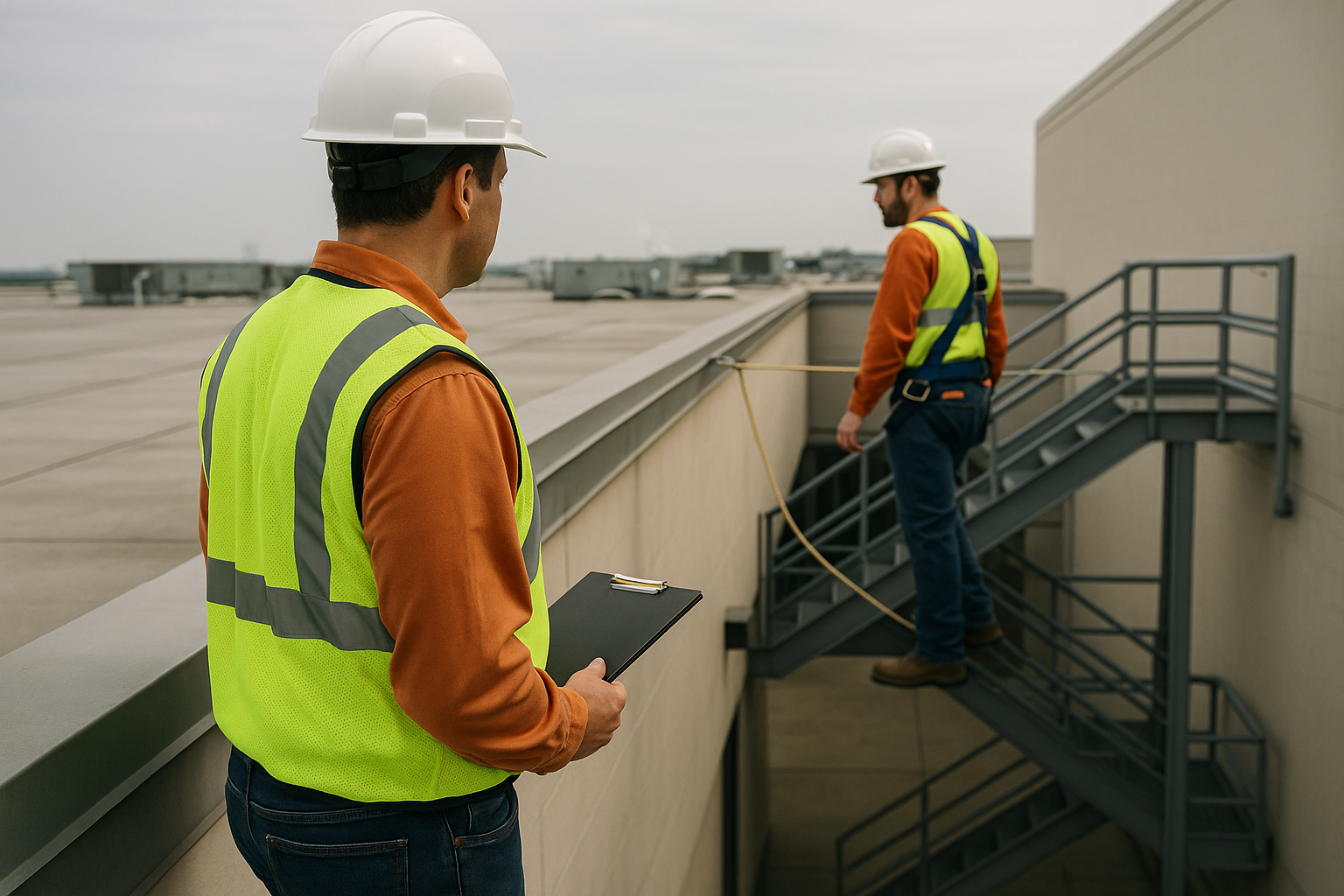
A 6-foot lanyard can fail roof fall clearance when a lower level is too close. Learn what OSHA requires for safe fall arrest setup.
Published: August 11, 2026 · By Steven Brooks
Category: Industrial Safety
Frequently Asked Questions
If workers are wearing harnesses, is the roof setup automatically compliant?
No. OSHA looks at the entire personal fall arrest system, not just the harness. The setup must be rigged so workers do not free fall more than 6 feet or strike a lower level.
Why is a 6-foot shock-absorbing lanyard a problem near a roof edge?
Because the total arrest distance is more than the lanyard length alone. You must also account for deceleration, harness stretch, worker height below the D-ring, and a safety margin.
Does a lower stair or platform below the roof edge change the hazard?
Yes. A nearby stair, platform, or steel obstruction can turn a marginal setup into an immediate strike hazard. OSHA requires the system to prevent contact with a lower level.
What is usually better than a standard lanyard when clearance is tight?
A properly selected self-retracting lifeline or a fall-restraint setup is often more appropriate. The right choice depends on anchor location, edge conditions, and the available clearance.
What should a safety manager verify before allowing roof work to continue?
Check the anchor location, the type of connecting device, the fall path, lower-level obstructions, swing fall exposure, and the manufacturer's clearance requirements. If those do not line up, the work should not restart.