Rooftop Solar Maintenance: Managing Electrical and Fall Risks Together
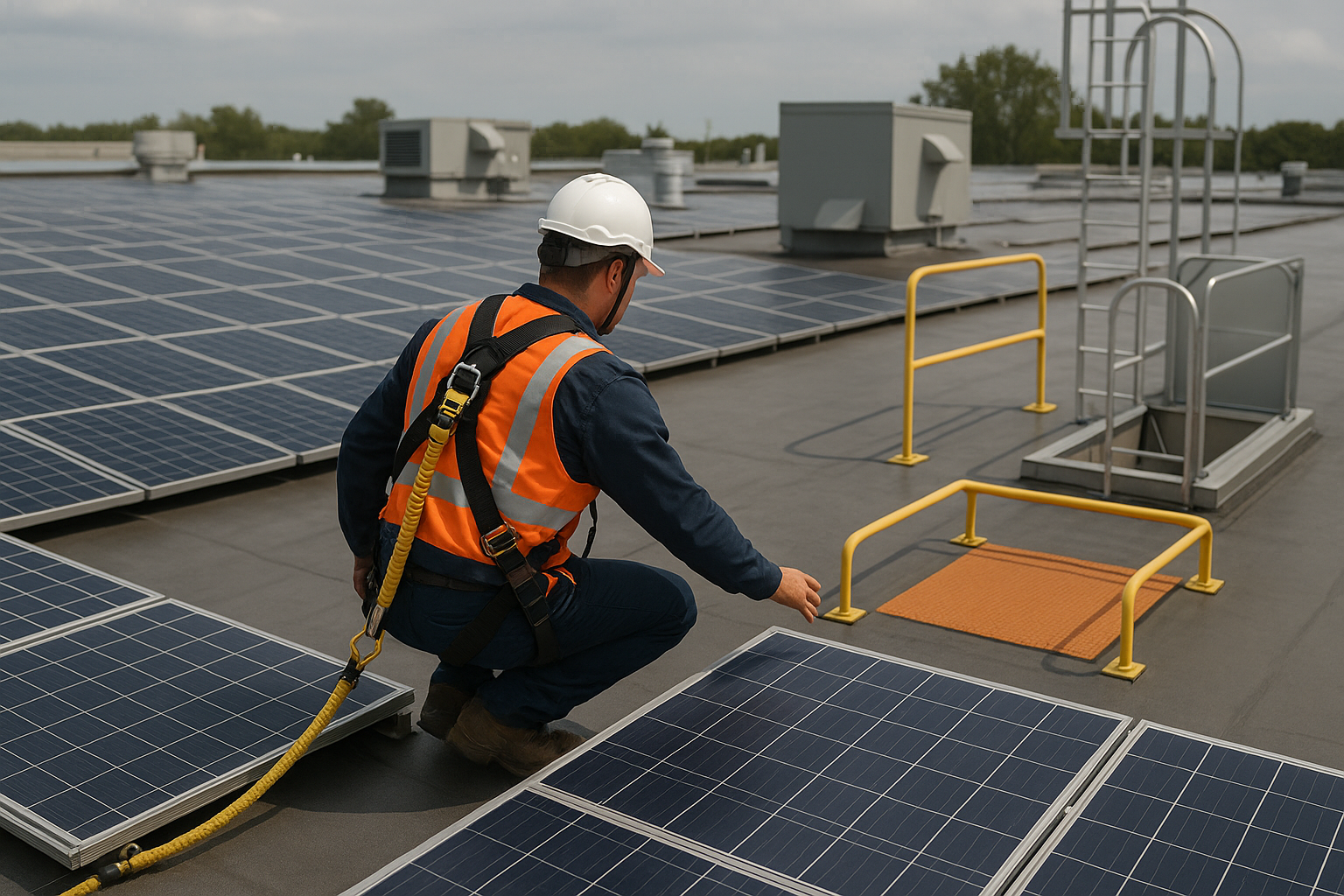
Manage rooftop solar maintenance by aligning contractor oversight, NFPA 70E electrical planning, and fall protection under OSHA 29 CFR 1926.501.
Published: June 25, 2026 · By SafetyNet Editorial Team
Updated: June 27, 2026
Category: Industrial Safety
Frequently Asked Questions
Who is responsible for safety during rooftop solar maintenance?
The post says responsibilities should be settled before work starts. The host employer often controls site access, roof conditions, and facility rules, while the contractor handles the technical solar work, so both sides need clear role clarity.
How do you manage electrical hazards and fall hazards on rooftop solar work together?
The post recommends treating them as one work plan instead of separate discussions. That means coordinating electrical isolation, approach boundaries, fall protection setup, body positioning, and rescue planning so one control does not create a new risk.
What should facilities teams check before rooftop solar contractors start work?
Facilities should verify roof condition, slip hazards, skylights, openings, edges, access paths, housekeeping, nearby equipment, lockable access points, and emergency access. The post also says to consider occupied areas below, including barricades, drop zones, and communication with building occupants.
What standards are mentioned for rooftop solar electrical and fall safety?
The post points to NFPA 70E for evaluating shock and arc flash exposure and determining controls around energized work. It also cites OSHA 29 CFR 1926.501 for fall protection where workers are exposed to covered fall hazards.
What should a good contractor management process include for rooftop solar maintenance?
According to the post, it should include a site-specific pre-job meeting, review of the job hazard analysis or task plan, confirmation of fall and electrical controls, realistic rescue procedures, and a clear roof work permit or authorization process. It should also include field checks during the job and a post-job review when there are problems, near misses, or scope changes.