Safer Chemical Warehousing in 2026: Containment, Segregation, and Suppression
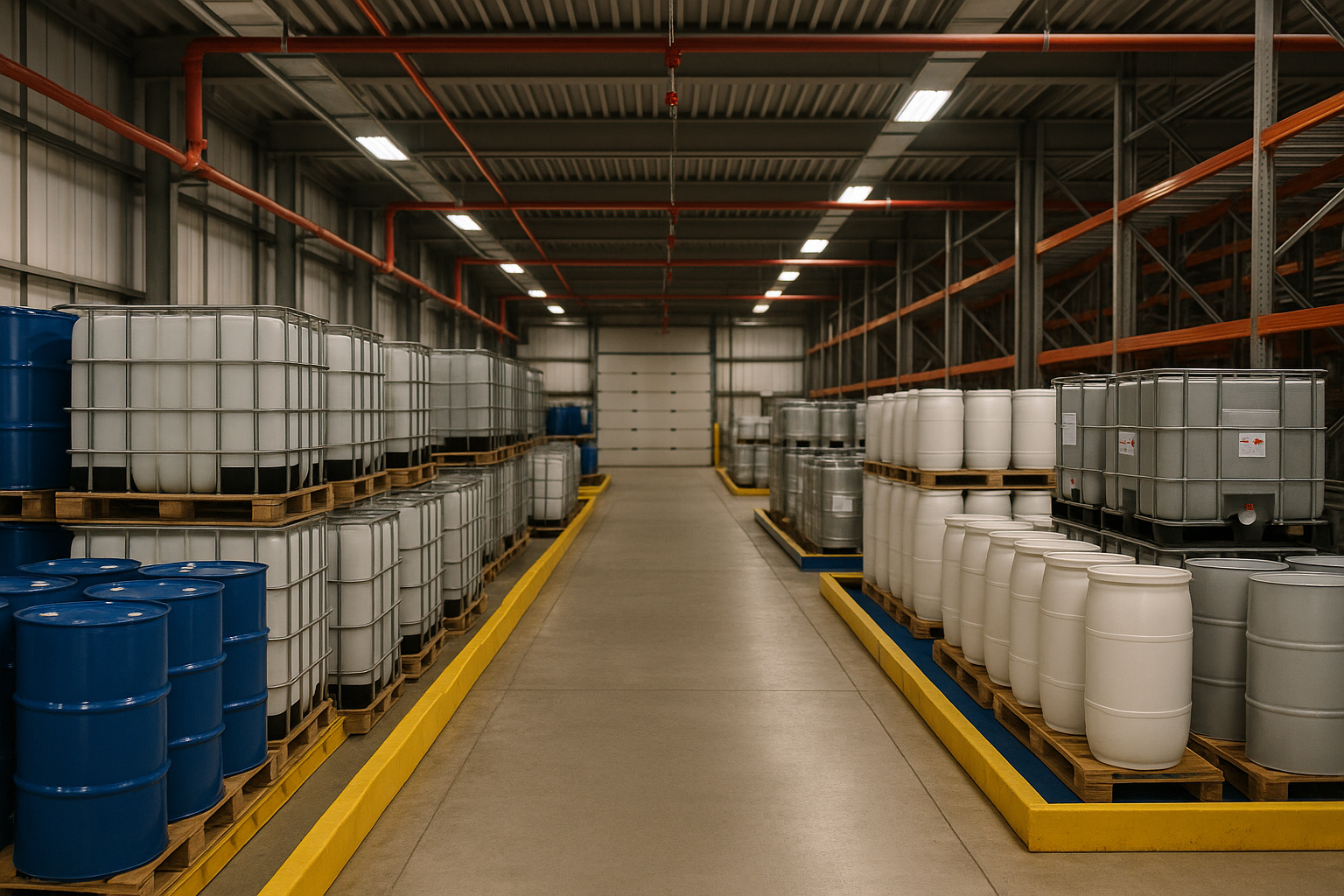
Improve chemical warehousing in 2026 with practical steps for containment, segregation, and suppression tied to OSHA 29 CFR 1910.176 and NFPA 30.
Published: June 27, 2026 · By SafetyNet Editorial Team
Category: Industrial Safety
Frequently Asked Questions
What should I check first to make a chemical warehouse safer?
Start with the layout. Check whether aisles, exits, pull stations, and emergency equipment are clear, traffic is separated from storage, and spill flow is directed into controlled areas instead of travel paths or incompatible stock.
How should secondary containment be designed for chemical storage?
Design containment around realistic release scenarios and the actual chemicals on site, not just a simple capacity calculation. The post recommends looking at where a spill would travel, whether it could reach another chemical family, and whether berms, curbs, sumps, or pallets fit the real storage pattern.
What should be included in a chemical segregation matrix?
It should be built for the chemicals actually on site and show whether materials can be stored together, what separation is required, and where each material belongs if they cannot. Useful matrices also include the product name used on site, hazard family, separation method, special restrictions, and references to the SDS and storage map.
Why do we need to review fire suppression override controls in a warehouse?
Because teams need to understand exactly what happens when detection occurs, what shuts down automatically, and when manual override, abort, or delay functions can be used. The post notes that undocumented system behavior after changes can create confusion during an emergency.
What is a good next step for an EHS manager after reading this?
Do a focused walkthrough that compares the drawing, the written procedure, and the actual storage conditions on the floor. The post also recommends tracing spill paths, validating the segregation matrix against current inventory, and reviewing suppression and override sequences with first responders.