Slips, Trips, and Falls: The Everyday Hazard That Still Hurts
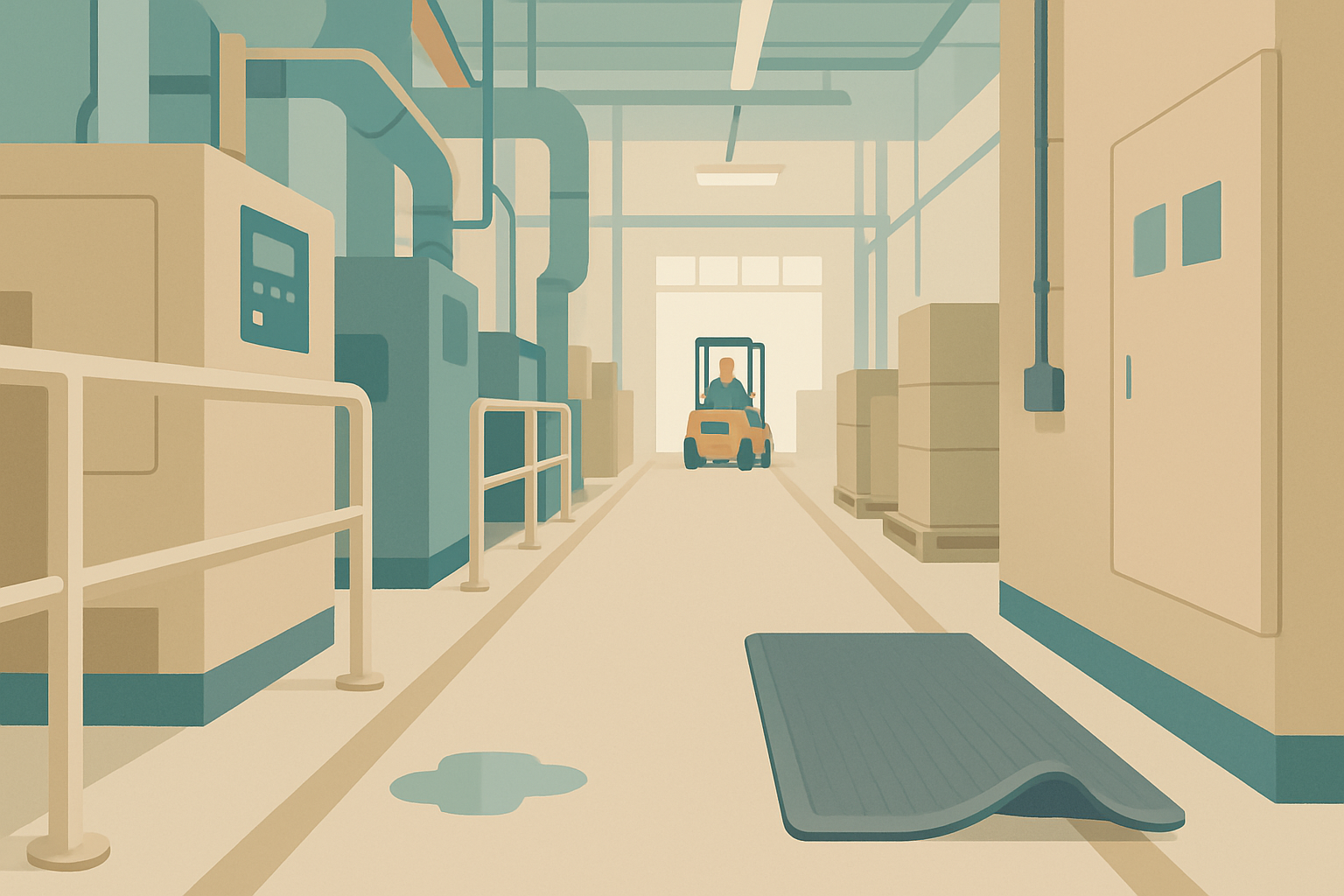
Reduce slips, trips, and falls by tightening daily basics: clear aisles, clean spills, fix surfaces, improve lighting, and check footwear.
Published: May 25, 2026 · By SafetyNet Editorial Team
Updated: June 27, 2026
Category: OSHA Quick Talks
Frequently Asked Questions
Can a same-level slip or trip really cause a serious injury?
Yes. The post says a same-level slip or trip can lead to serious injuries such as fractures, sprains, head injuries, and long recovery time.
What usually causes slips, trips, and falls in general industry and construction?
Common factors mentioned in the post include wet floors, uneven surfaces, cluttered aisles, poor lighting, loose cords, rushed movement, and carrying loads that block the view ahead.
What are the most important things to check every day to prevent slips and trips?
Focus on everyday basics: keep aisles, stairs, and exits clear, clean up spills quickly, control tracked-in water, mud, or oil, repair damaged flooring and mats, and improve lighting in travel paths and storage areas.
Does footwear matter for slip and trip prevention?
Yes. The post says footwear should match the task and the surface conditions.
What OSHA rules are mentioned for walking-working surfaces and fall protection?
The post references OSHA walking-working surface requirements under 29 CFR 1910 Subpart D and fall protection rules such as 29 CFR 1926.501. Its practical takeaway is to inspect any area people walk through like it can hurt someone.