Understanding GHS Requirements for Manufacturing Businesses
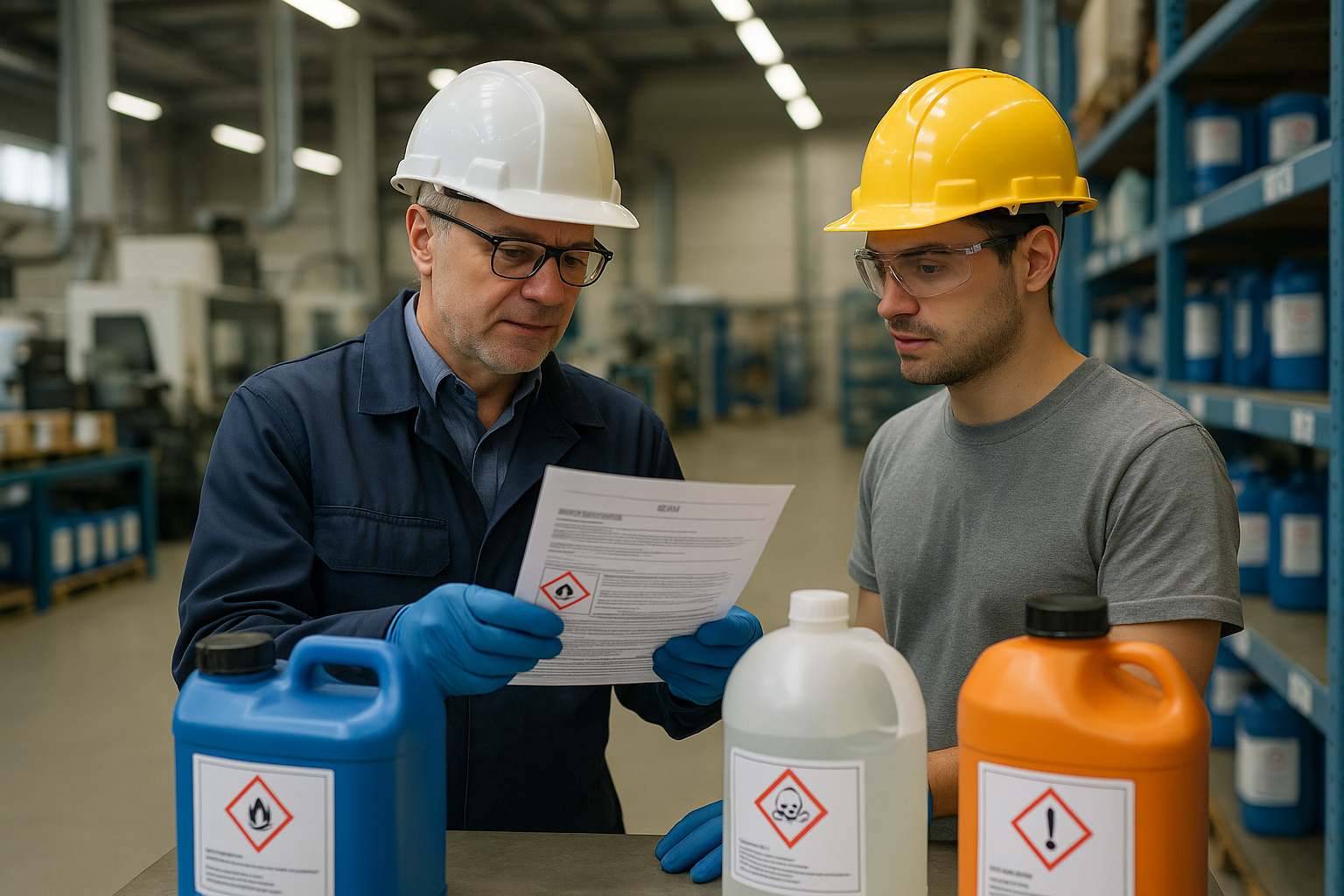
Learn how GHS requirements affect labels, SDS, training, and secondary containers so your manufacturing hazard communication program works in practice.
Published: June 18, 2026 · By SafetyNet Editorial Team
Updated: June 27, 2026
Category: Industrial Safety
Frequently Asked Questions
What does GHS require manufacturing businesses to manage?
For manufacturers, GHS affects labels, Safety Data Sheets, employee training, workplace container labeling, and the written hazard communication program. The goal is to keep chemical hazard information accurate, accessible, and understandable across the facility.
What are the most common GHS problem areas in manufacturing?
The post highlights secondary container labels, missing or outdated SDS, incomplete chemical inventories, and outdated hazard communication programs as common weak points. It also notes issues with contractors, storage practices, and employees who recognize pictograms but do not know what actions to take.
How should we train employees on GHS in a manufacturing plant?
Training should use real site chemicals, containers, and tasks so employees can read labels, find SDS, and handle unclear or unlabeled containers correctly. It should also be tailored to the jobs people actually perform and checked with field observations, not just sign-in sheets.
How can I audit our GHS program before an OSHA inspection or incident?
Start with a walkthrough to check labels, SDS access, product identifiers, inventories, storage practices, contractor communication, and whether the written program matches current operations. Then test the system in real conditions by asking employees to find an SDS, checking for unlabeled containers, and comparing training records to actual job assignments.
Why do secondary containers cause so many GHS issues?
The post explains that chemicals may arrive properly labeled from suppliers, but labeling discipline often slips after transfer into spray bottles, smaller process containers, or temporary use containers. That creates confusion and can slow routine verification or emergency response.