Understanding NFPA 70E Electrical Safety in the Workplace
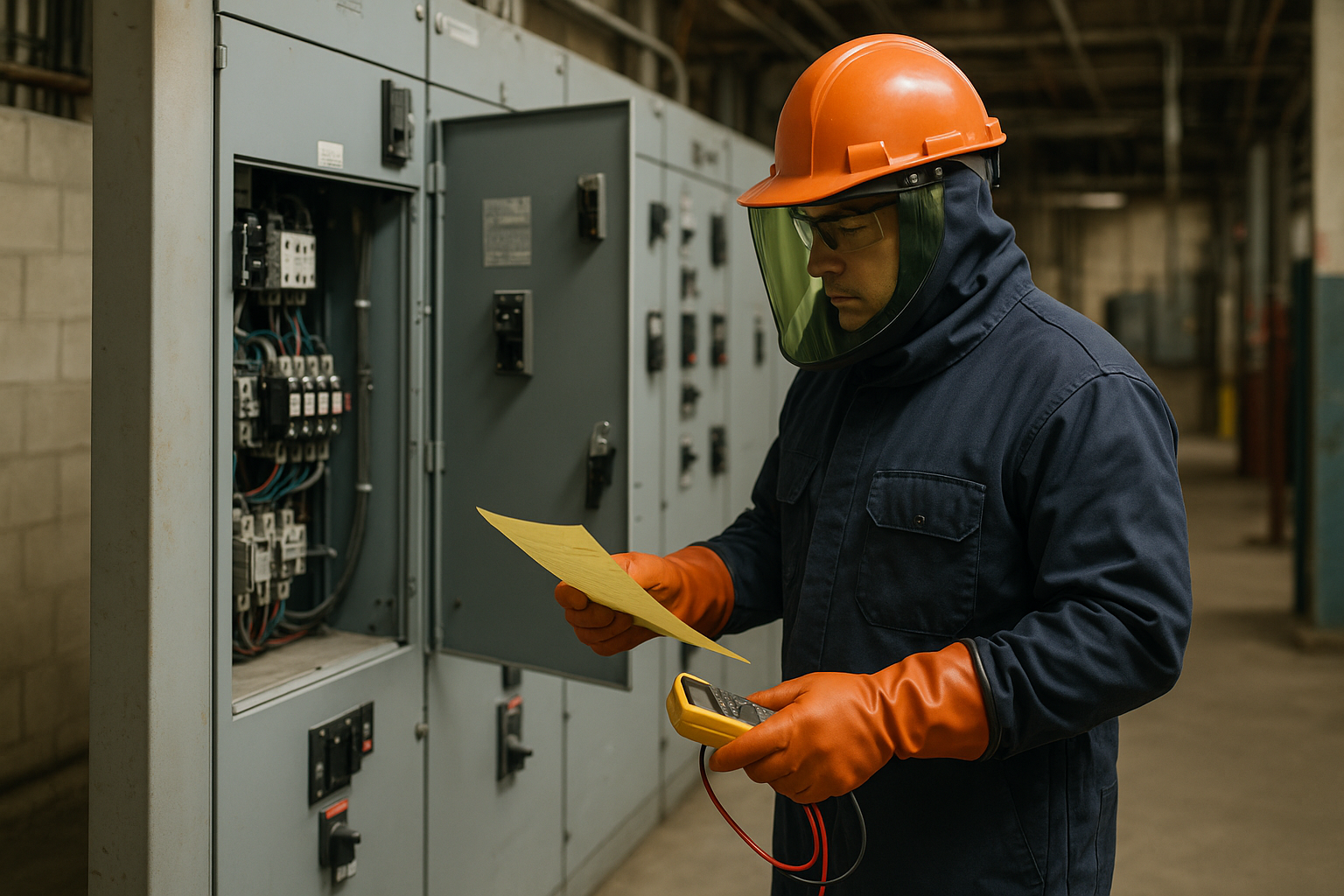
Learn how NFPA 70E helps EHS managers reduce shock and arc flash risk through de-energizing, training, audits, and safer work practices.
Published: June 21, 2026 · By SafetyNet Editorial Team
Updated: June 27, 2026
Category: Industrial Safety
Frequently Asked Questions
What is NFPA 70E and does OSHA require it?
NFPA 70E is a workplace electrical safety standard many employers use to guide safe work around electrical systems. It is closely tied to OSHA’s expectation that employers protect workers from recognized hazards, but NFPA 70E itself is not an OSHA regulation.
What does NFPA 70E say about de-energizing equipment before work starts?
A core idea in NFPA 70E is that equipment should be placed in an electrically safe work condition before work begins whenever feasible. In practice, that means de-energizing equipment and verifying it is safe before employees start tasks that could expose them to electrical hazards.
What should an effective NFPA 70E electrical safety program include?
The post says a strong program should include written responsibilities, hazard identification and risk assessment, procedures for establishing an electrically safe work condition, rules for justified energized work, training, PPE, labeling, contractor coordination, and auditing. It should also work in the field, not just exist in documents.
Who needs NFPA 70E training and what should that training cover?
The standard distinguishes between qualified and unqualified persons, so training should match job duties and exposure. The post says training should include hazard awareness, task-specific procedures, PPE and tool use, approach boundaries, emergency response expectations, and retraining when work changes or audits show gaps.
What are the most common NFPA 70E trouble spots for industrial employers?
Common trouble spots include outdated drawings, missing or inaccurate labels, unclear energized work expectations, gaps between lockout/tagout procedures and actual isolation steps, PPE that is not matched to the task, contractor misalignment, and limited auditing of real job performance. The post says these issues usually require coordination across EHS, maintenance, operations, engineering, contractors, and leadership.