Warehouse Exit Routes Under Scrutiny: What OSHA’s Warehousing Focus Means
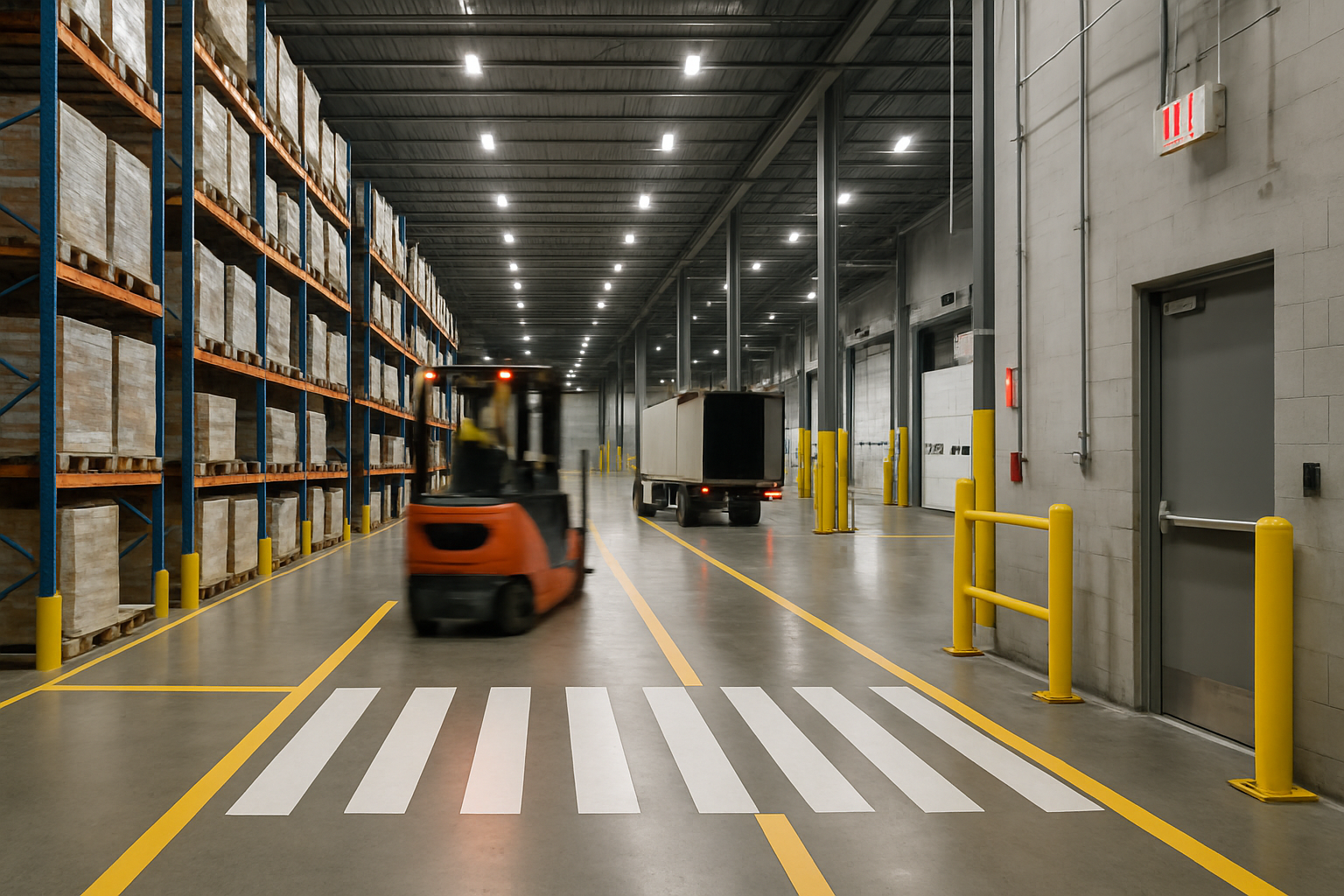
OSHA’s warehousing focus puts exit routes, aisles, docks, and traffic flow under scrutiny. Learn what warehouse leaders should check now.
Published: June 29, 2026 · By SafetyNet Editorial Team
Category: Industrial Safety
Frequently Asked Questions
What warehouse conditions are most likely to draw attention during an OSHA inspection?
Blocked exit access, narrowed aisles, poor dock housekeeping, and weak pedestrian-forklift separation are common conditions to review first. They are easy to see and often point to broader control problems.
Do exit route requirements apply only to the exit door itself?
No. The path leading to the exit matters too. If staging, pallets, or equipment obstruct the route, the exit may not be usable when employees need it.
How can we improve pedestrian safety without redesigning the whole warehouse?
Start with marked walkways, designated crossings, better sightlines, and no-storage rules at corners and docks. In higher-exposure areas, barriers or guardrails can add needed separation.
What should supervisors check every day in a warehouse?
Daily checks should cover exit access, aisle clearance, dock housekeeping, and pedestrian routes. The goal is to catch blocked access and congestion before they become normal.
Why do housekeeping issues matter so much for egress and traffic control?
Housekeeping problems do more than create trip hazards. They also reduce usable aisle space, block exit access, and push pedestrians into forklift travel lanes.